
Ever had butterflies before something big? That is not a figure of speech. That is a nerve doing its job.
There is a single nerve that has more to say about how you sleep, how you handle stress, and how fast you bounce back than almost anything else in your body. It is called the vagus nerve, and once you understand what it does, a lot of what happens at a recovery studio stops looking like a spa menu and starts looking like a plan.
Your body runs in two gears
Think of your nervous system as having two gears. One is stress, the fight-or-flight setting that revs you up. The other is recovery, the rest-and-digest setting that lets you calm down, sleep, and repair. The vagus nerve is the main cable for that second gear. Researchers describe it as the primary pathway carrying information between your brain and your major organs, and the majority of that traffic runs from the body up to the brain rather than the other way around (Berthoud and Neuhuber, 2000; de Lartigue, 2014). Your gut, your heart, and your lungs are constantly reporting in, and the vagus is the line they report on.
That upward flow is why a gut feeling feels like something. It is also why those butterflies show up. The nervous system in your gut is real and it is large. Scientists call it the enteric nervous system, sometimes the “second brain,” and it holds more nerve cells than your entire spinal cord (Llorente, 2024). Here is the elegant part. During development, that gut brain is built by the very same cells that go on to form much of the vagus nerve, so the gut and the vagus are wired from the same origin (Lake and Heuckeroth, 2013; Faure et al., 2014). The butterflies are not in your head. They are a status report, sent up the vagus, from a nervous system that was one of the first things you ever grew.
The number that tells you how it is going
You cannot see your vagus nerve, but you can measure how well it is working. The read-out is called heart rate variability, or HRV, the tiny beat-to-beat variation in your heart rhythm. More variation is generally a good sign. It means the recovery gear is engaged and your body is adaptable rather than stuck in overdrive. Scientists treat HRV as one of the most practical windows into vagal activity, and higher vagally driven HRV tends to track with lower inflammation and better stress resilience (Bonaz et al., 2016; Williams et al., 2019).
If you wear a recovery device like Morpheus, Whoop, or a Garmin, the recovery score it hands you every morning is built largely on this number. That is the same signal we care about at Sisu.
The good news: you can train it
This is the part we love. You do not just have to read about your vagus nerve, you can work it. Several of the things that nudge your body toward the recovery gear are exactly the things a good recovery session is built around.
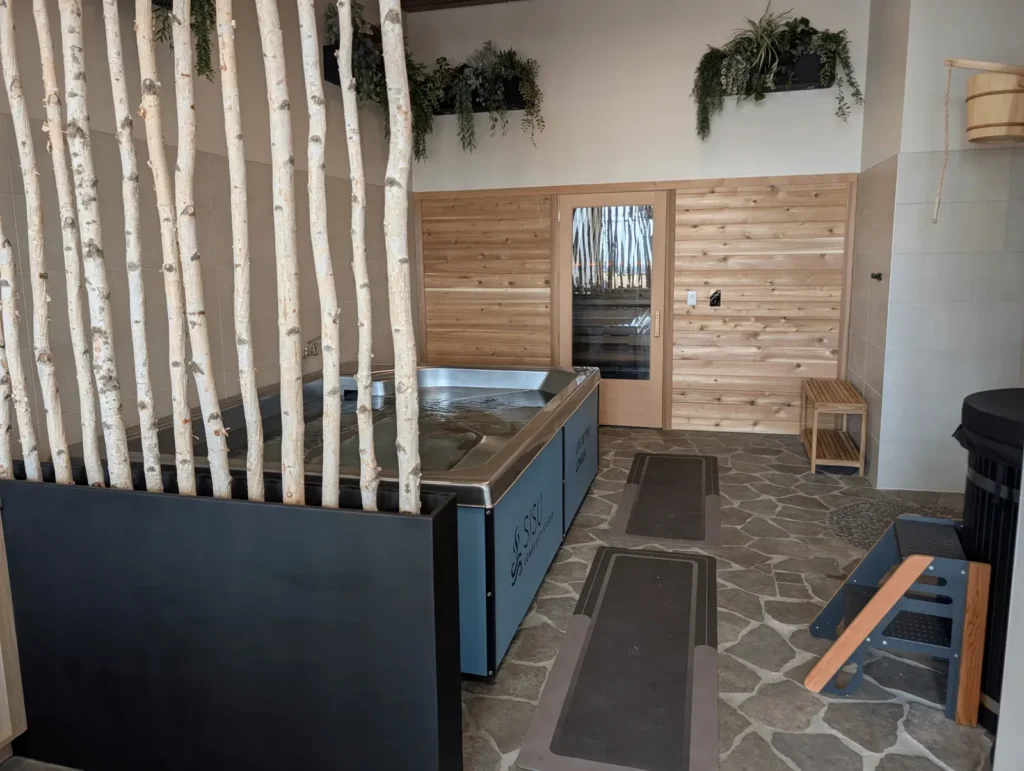
Cold is the clearest example. A cold plunge is a jolt up front, but the interesting effect comes afterward. When researchers looked at cold water immersion following hard exercise, the cold group returned to the recovery side of the nervous system faster than athletes who simply rested (Bastos et al., 2012). That is the rebound we are after. Pairing heat and cold, our contrast therapy, stacks the relaxation of the sauna with that cold rebound in one session.
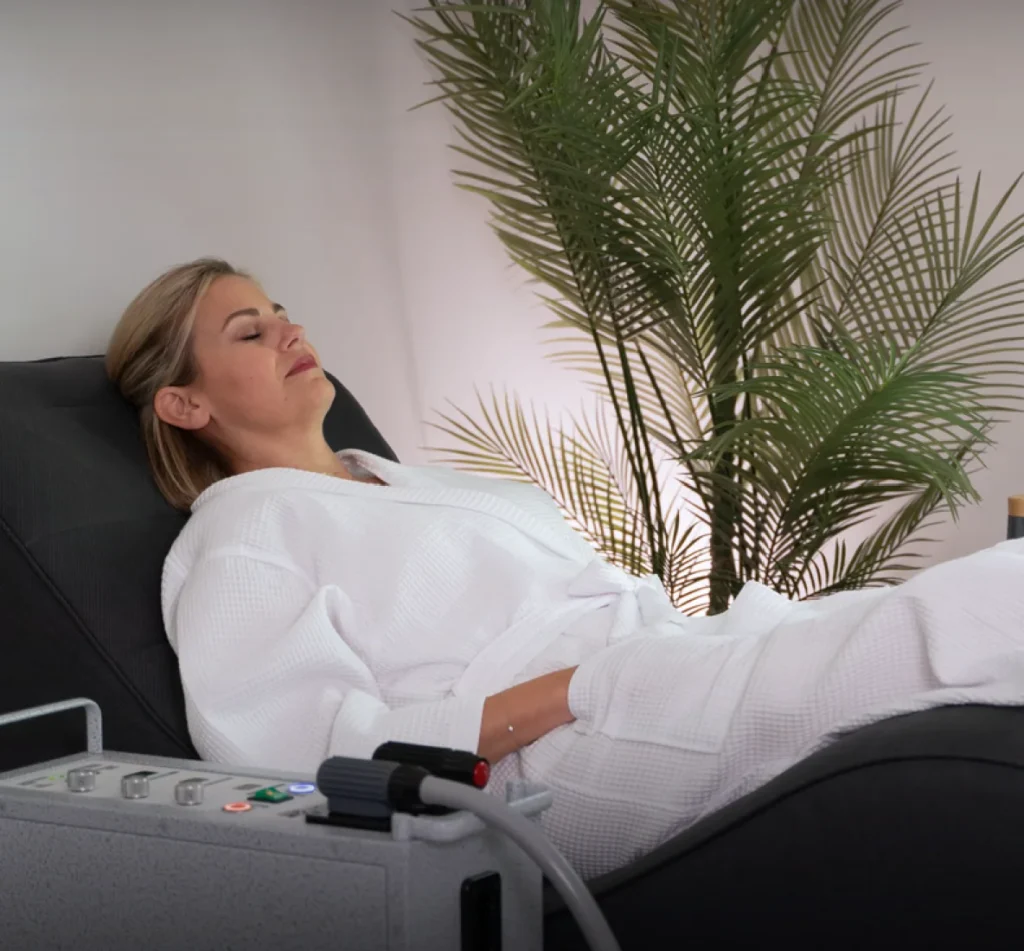
From there, the menu is really a set of on-ramps to the same gear. Float therapy removes light, sound, and gravity so the system has nothing left to brace against. Vibroacoustic therapy uses low-frequency sound and gentle music to help you settle. PEMF rounds out the recovery block. And the least glamorous tools work too. Slow breathing and regular exercise are two of the most reliable ways to raise vagal tone over time (Bonaz et al., 2016).
None of this is a cure for anything, and it is not medical treatment. It is a set of levers, backed by real physiology, for spending more of your day in the gear where you recover.
Where Sisu is different
Plenty of places in Colorado Springs will sell you a sauna session or a cold plunge. Very few can tell you why it works, and fewer still can help you watch it work. That is the whole point of what we do. The Sisu Assessment gives you a baseline, and if you track HRV on a wearable, you can actually see the recovery side of your nervous system respond over the weeks. Feeling better is nice. Watching the number move is what turns a good habit into a decision you keep making.
Come feel the switch flip. Book a tour and your first session is on us.
Live Better. Longer.
By Thom Salo, COL, USA (Ret.), NASM CPT, 5x Ironman, Longevity Director
References
Bastos, F. N., Vanderlei, L. C. M., Nakamura, F. Y., et al. (2012). Effects of cold water immersion and active recovery on post-exercise heart rate variability. International Journal of Sports Medicine, 33(11), 873-879. https://doi.org/10.1055/s-0032-1301905
Berthoud, H. R., & Neuhuber, W. L. (2000). Functional and chemical anatomy of the afferent vagal system. Autonomic Neuroscience, 85(1-3), 1-17. https://doi.org/10.1016/S1566-0702(00)00215-0
Bonaz, B., Sinniger, V., & Pellissier, S. (2016). Vagal tone: Effects on sensitivity, motility, and inflammation. Neurogastroenterology & Motility, 28(4), 455-462. https://doi.org/10.1111/nmo.12817
de Lartigue, G. (2014). Putative roles of neuropeptides in vagal afferent signaling. Physiology & Behavior, 136, 155-169. https://doi.org/10.1016/j.physbeh.2014.03.011
Faure, S., McKey, J., Sagnol, S., & de Santa Barbara, P. (2014). Enteric neural crest cells regulate vertebrate stomach patterning and differentiation. Development, 142(2), 331-342. https://doi.org/10.1242/dev.118422
Lake, J. I., & Heuckeroth, R. O. (2013). Enteric nervous system development: Migration, differentiation, and disease. American Journal of Physiology-Gastrointestinal and Liver Physiology, 305(1), G1-G24. https://doi.org/10.1152/ajpgi.00452.2012
Llorente, C. (2024). The imperative for innovative enteric nervous system-intestinal organoid co-culture models. Cells, 13(10), 820. https://doi.org/10.3390/cells13100820
Williams, D. P., Koenig, J., Carnevali, L., et al. (2019). Heart rate variability and inflammation: A meta-analysis of human studies. Brain, Behavior, and Immunity, 80, 219-226. https://doi.org/10.1016/j.bbi.2019.03.009
Sources retrieved via PubMed.