

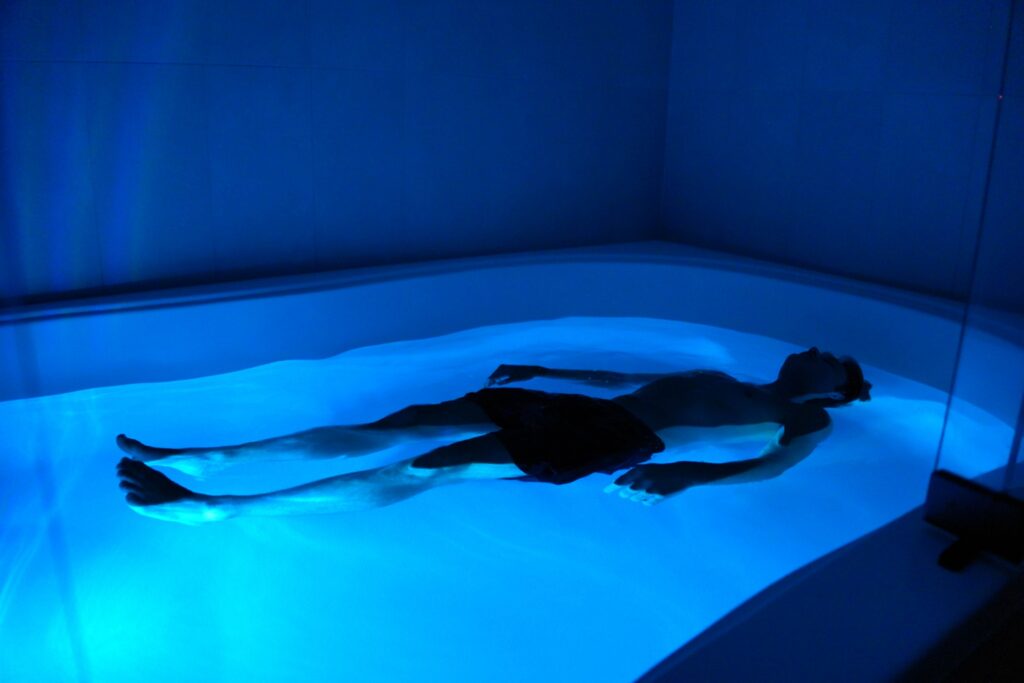
What Is Float Room Therapy?
Benefits + Target Areas of Float Therapy
Benefits for body, mind, and recovery.
Deep Relaxation and Stress Reduction
With external stimuli stripped away, floating may help lower cortisol and bring on a real sense of physical and mental calm.
Improved Sleep Quality
Floating can help reset the nervous system, which may support deeper, more restorative sleep.
Pain Relief and Muscle Recovery
The buoyancy takes pressure off your joints and muscles, which can ease everyday aches and help you recover after physical exertion.
Enhanced Mental Clarity and Focus
With less sensory input, many floaters settle into a meditative state that can sharpen focus and thinking.
Reduced Anxiety and Depression Symptoms
The relaxation response and endorphin release during a float can ease muscle tension and lift your mood.
Boosted Creativity and Problem-Solving
That same quiet, meditative state can open up creative thinking and give you space to work through problems.
Improved Circulation
Warm salt water can support blood flow, helping carry oxygen and nutrients to your tissues.
Skin Health
Epsom salt softens skin and supports magnesium absorption. Many floaters notice softer skin and less muscle tension after a session.
Lowered Blood Pressure
The deep relaxation of a float may support healthy blood pressure. If you have a cardiovascular condition, check with your physician first.
If you’ve been looking for a float room or sensory deprivation experience in Colorado Springs, Sisu Longevity Studio’s two-person float room is an easy place to start.
Hear From Our Clients
Marcus Alvarado
7 hours ago
I had a blast checking out the facility with Thom, and did the amazing sauna they built out and it was incredible. Great experience, and fantastic amenities!
Becky O'Malley
a week ago
Thom was incredibly knowledgeable and passionate about everything Sisu has to offer. We enjoyed our float and the studio is beautifully designed - a great place for training and recovering!
Sean O'Malley
a week ago
Great facility. Super knowledgeable and friendly staff!
J Dubs
a week ago
Has a lovely open float spa. Also has other spa stuff like red light therapy, vibrational therapy, and halotherpy and other stuff too. Check it out.
B&C Perkins
2 weeks ago
My husband and I LOVED Sisu! We’ve tried other contrast therapy places before, but this one takes the cake! We loved the atmosphere coming in and the owner is super passionate about wellness and longevity. He was so friendly and … Read more
Zach Ledbetter
a month ago
I recently had the opportunity to visit Sisu Longevity Studio, and the facility is incredible. It’s beautiful, modern, welcoming, and thoughtfully designed from top to bottom. I was especially impressed by how well the services have been brought together to … Read more
Chris Hall
a month ago
The whole team at Sisu Longevity Studio is incredible. Thom, Leela, and Paige have all gone above and beyond to support me through recovery from multiple knee surgeries. As a family-owned and operated small business, they bring a level of … Read more
Sam Peterson
a month ago
This place epitomizes executive wellness. Between the massive sauna, group cold plunge , red light therapy, vibroacoustic sound chairs and functional fitness studio, SISU has everything that you need to keep your body and mind healthy as you age. The … Read more
Janee Bishop
2 months ago
I love how versatile Sisu is between the red light therapy, float tank, contrast therapy I’m already sucked in that’s just 3 out of 10 options! This place is a wake up call and I’ll answer from now on. Stop … Read more
Peter Harris
2 months ago
Thom is a great person who has built a fantastic recovery and functional fitness studio that fits anyone’s needs not just to put years into you life, but life in your years!
Our environment, designed for longevity
Our Equipment
We built a toolkit, not a showroom. Every modality here was selected because the research backs it, then sourced from the providers who do it best. The same hard-shell hyperbaric technology used in clinical settings. The same anti-gravity treadmill trusted by professional athletes. That standard runs through everything we do.
Our Space
We designed Sisu around the belief that environment shapes outcomes. Intuitive flow between ten modalities, private changing areas, and a team present enough to guide you and experienced enough to get out of your way. This is what a serious longevity space feels like.
Our Amenities
Relaxation lounge, tea service, and hydration stations. We provide bench mats for every sauna session. Bring your own towel and robe, or pick up the real thing — we carry authentic Finnish sauna textiles in-studio. Private locker rooms and showers.
Dig in deeper with Float Therapy in Colorado Springs (Float Room + Sensory Deprivation)
View our other modalities & services
Begin to Live Better ... Longer
Improved healthspan and longevity starts with showing up. Choose a membership tier that fits your schedule, and build from there — Core sessions, Premium services, and coached training are all under one roof.
Experience Sisu for Yourself
Come see it. Schedule a tour and try the space before you commit.
Image Gallery
Float Therapy in Colorado Springs (Float Room + Sensory Deprivation)
Frequently Asked Questions About Float Therapy
Safety Questions
I'm claustrophobic. Can I still float?
Our float room is built like a walk-in shower rather than a closed pod. It’s spacious enough for two people, with high ceilings and glass doors, so you can see out the whole time. Keep the doors open, leave the lights on, and step out whenever you want. You’re always in control. Most people who worry about claustrophobia find the concern fades as soon as they see the room.
Is the water clean?
Very. The high salt concentration is naturally antimicrobial, so harmful microbes can’t survive in it. On top of that, the water is filtered several times between every float using UV sterilization and multi-stage filtration. We hold the water to strict quality standards and test it regularly. In practice, the float environment is cleaner than most swimming pools.
What if I fall asleep?
Plenty of people do, and it’s completely safe. The high salt concentration makes it impossible to sink or roll over, so you’ll stay face-up even if you drift off entirely. Some of the most restorative floats include stretches of sleep. Your session ends with gentle music, so you won’t miss your exit time.
Who shouldn't float?
If you have uncontrolled epilepsy, a serious mental health condition, open wounds, or certain skin conditions, check with your doctor before floating. We don’t recommend floating under the influence of alcohol or drugs. If you’re pregnant, talk with your healthcare provider first, though many pregnant floaters find it a welcome relief from the physical demands of pregnancy.
General questions
What does floating feel like?
Most people describe floating as deeply relaxing and unlike anything else they’ve tried. The high salt concentration makes you completely buoyant, so you float without any effort. Because the water sits at skin temperature, you eventually lose track of where your body ends and the water begins. Many people slip into a meditative or dreamlike state, and some fall asleep. Others have real moments of insight, or simply enjoy the rare feeling of complete stillness. Your experience will be your own.
What should I do to prepare?
Avoid shaving or waxing for 12 to 24 hours before your float, since salt water can sting fresh skin. Skip caffeine close to your session, as it can make it harder to relax. Eat a light meal 60 to 90 minutes beforehand so you’re not hungry but not full. Take out contact lenses before you float. We provide earplugs to prevent water from getting in the ear and to reduce sound. Bring your own towel. Showers are available before and after your float.
Can two people float together?
Yes. Our float room is designed to fit two people comfortably. Couples often float together, and some find the shared experience brings them closer. Others prefer a solo float for complete solitude. Both options are available.
Results Timeline
How long is a session?
Sessions come in 60- and 90-minute options. First-time floaters usually do well with 60 minutes, which is enough time to settle in and feel the full effect. Members who float regularly often prefer 90 minutes for a deeper session. Both lengths are available for individual and couples floats.
How often should I float?
The benefits build over time, so regular floating gives the best results. A lot of people start with weekly sessions for the first month to get into a rhythm, then settle into 2 to 4 floats a month for maintenance. Athletes often float more during heavy training blocks, and some people come in only now and then for specific recovery needs. There’s no wrong frequency. We’ll help you find what fits your goals and schedule.
Hair Dye
I recently colored my hair. Can I still float?
Not right away. Fresh hair dye can release into the float water, and since the water is a concentrated salt solution shared by every guest, we wait until your color is fully set. Please plan to float no sooner than two weeks after coloring, and only once your hair no longer releases any color. For the full hair-color guide, including a simple at-home test, see our complete FAQ.
See How We Can Help!
This content is blocked because Google Maps cookies have not been accepted.