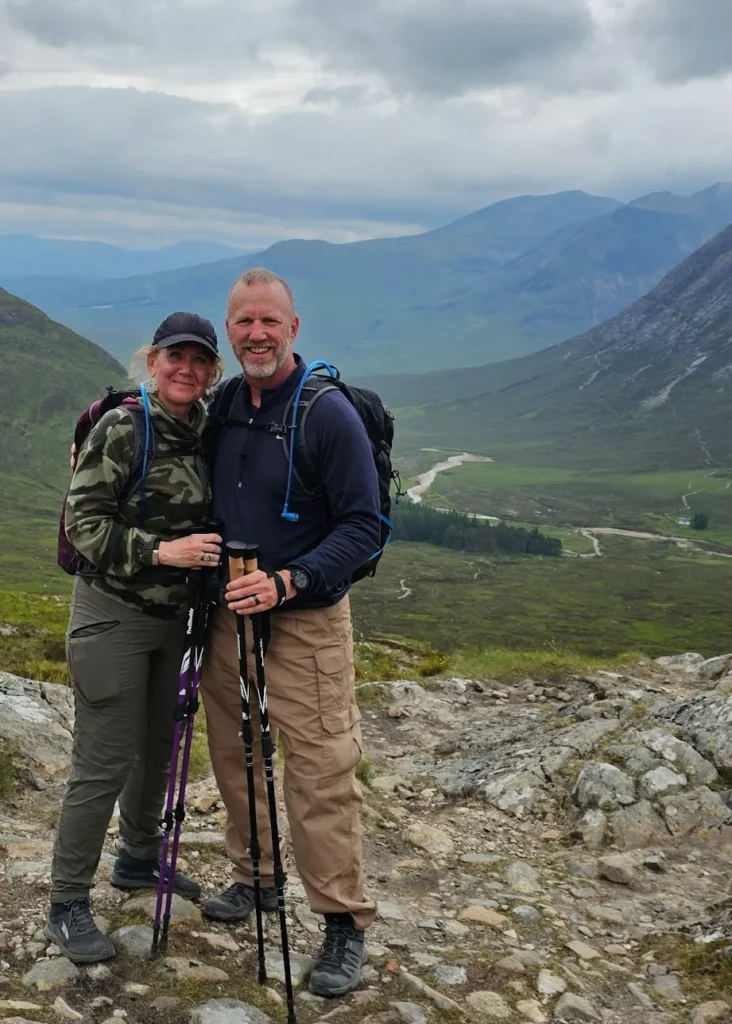

By Thom Salo, COL, USA (Ret), NASM CPT, 5x Ironman, Longevity Director
Years ago I was a Captain serving at a NATO headquarters, the Allied Command Europe Rapid Reaction Corps, in Rheindahlen, Germany. A Norwegian Colonel I worked with mentioned, almost in passing, that he and his wife did not use soap or shampoo. Just water. I remember thinking it was one of the strangest things I had ever heard, and quietly filing a decorated NATO officer under “eccentric.” I now owe that Colonel an apology, because I have not used soap or shampoo on my body or hair in about seven years, and my skin has never been better.
Before you close the tab: I’m not about to tell you that hygiene is a conspiracy. I still use soap on my hands, every time, for reasons I’ll get to. What I am going to tell you is that the soap aisle has oversold itself, that your skin is a more capable organ than the marketing suggests, and that the people who figured this out first were sitting in saunas a very long time before either of us was born. Some of this is well-supported science. Some of it is plausible but unproven, and I will be honest about which is which.
My own seven-year experiment
I have had sensitive skin my whole life. Not just to bar soaps and body washes, but to laundry detergents too. For years the result was the same low-grade nuisance: dry, tight, itchy skin, the kind you stop noticing until it flares. I tried gentler products. I tried moisturizing more. The thing that actually worked was the thing that Norwegian Colonel had been doing all along. I stopped using soap.
Within weeks the dryness and itch faded and did not come back. I also stopped shampooing. I have very fine, thin hair, and it turns out harsh shampoo was doing nothing for it that water and time couldn’t do better. This is an n of one, which is to say it’s a story and not a study. But as I started reading the actual dermatology and microbiome literature, I realized my “weird” experiment was sitting on a surprisingly solid foundation.
Your skin is not as dirty as the soap aisle wants you to think
Healthy skin maintains a slightly acidic surface, the so-called acid mantle, with a measured average pH of about 4.7 (Lambers et al., 2006). That acidity is not an accident. It supports the skin barrier, regulates the enzymes that keep the outer layer intact, and helps fend off unwanted microbes (Schmid-Wendtner & Korting, 2006; Abels & Angelova-Fischer, 2018).
Now consider what traditional soap is. When researchers actually measured cleansing bars, they came in at a pH of roughly 9.8 to 11.3 (Kulthanan et al., 2014). That is strongly alkaline. Every time you lather up, you are not just removing dirt, you are flipping your skin’s chemistry in the wrong direction, and that shift does not reverse the moment you rinse off (Lambers et al., 2006).
The surfactants that make soap foam are the other half of the problem. They strip away the stratum corneum’s protective lipids and bind to skin proteins, and they wash out the natural moisturizing factor that holds water in the outer layer (Ananthapadmanabhan et al., 2004; Rawlings & Harding, 2004). The visible result is exactly what I lived with for years: tightness, dryness, and itch. In one controlled study on sensitive-skin volunteers, a mild soap-free cleanser did about as little damage to the skin barrier as washing with plain water, while the authors noted plainly that “washing with soaps is harmful for barrier-related parameters” (Bornkessel et al., 2005).
What the dermatologists actually recommend
This is the part of the case that is on the firmest ground, and it is worth saying clearly. For dry, sensitive, and eczema-prone skin, mainstream dermatology already points away from harsh soap. The American Academy of Dermatology’s 2023 atopic dermatitis guideline strongly recommends moisturizers and recommends against the routine use of topical antimicrobials and antiseptics (Sidbury et al., 2023). The broader clinical literature consistently favors gentle, low-pH, non-soap cleansing and warns that over-washing drives the very dryness people then try to treat (Ananthapadmanabhan et al., 2004; Schmid-Wendtner & Korting, 2006).
Here’s the honest boundary. No controlled trial has tested “literally water-only, forever” as a regimen. So I’m not claiming the guidelines endorse going fully soap-free. I am saying the logic of those guidelines, minimize harsh surfactants, protect the barrier, stop stripping skin that is already struggling, extends very naturally to where I landed. For a person whose dry itchy skin resolved the month they quit soap, that is not a coincidence. It is the mechanism working exactly as described.
The microbiome you wash down the drain
Your skin is its own ecosystem. It is home to a stable community of bacteria, dominated by friendly residents like Staphylococcus epidermidis and Cutibacterium acnes, that help train your immune system and crowd out troublemakers (Grice & Segre, 2011; Byrd et al., 2018). These are not passengers. S. epidermidis and C. acnes actively inhibit invasion by more harmful microbes, and skin health tends to track with the balance of this community rather than the mere presence of any one species (O’Neill & Gallo, 2018).
It is tempting to draw a straight line from there to “so don’t disturb it with soap.” I want to be careful, because this is where a lot of soap-free enthusiasm gets ahead of the evidence. That the skin microbiome matters is well established. That preserving it by skipping soap produces measurable health benefits in an otherwise healthy person is not. The flagship commercial attempt to prove a version of this, a live-bacteria spray sold as a soap alternative, rests on a small, short, uncontrolled study run partly by the company selling it (Notay et al., 2020). Treat that as a hint, not a verdict. The microbiome is a good reason to suspect that less aggressive washing is gentler on your skin’s ecology. It’s not yet proof that it makes you healthier.
Where the sauna comes in
If you are not scrubbing with detergent, what is actually getting you clean? Water and friction handle most of it. Sweat handles a surprising amount of the rest, and this is where things get interesting for a longevity studio.
Sweat is not just salty water. It carries dermcidin, an antimicrobial peptide your sweat glands produce continuously and deliver to the skin surface, where it stays active across the salty, slightly acidic conditions of sweat itself (Schittek et al., 2001). In other words, your body ships a mild built-in antibiotic to your skin every time you perspire. A good sauna session opens the pores, drives a thorough sweat, and finishes with a rinse. Regular sauna use also carries its own well-documented benefits for cardiovascular and overall health, independent of anything to do with washing (Laukkanen et al., 2018).
Does daily sauna sweating genuinely replace washing? That specific claim is plausible and mechanistically reasonable, but it has not been directly proven, so I will not pretend otherwise. What I can say is that a person who sweats hard in a sauna several times a week and rinses off is not walking around dirty. The history backs that up better than any study could.
This is how people stayed clean for most of human history
We treat the daily sudsy shower as the natural state of cleanliness. It’s actually a recent luxury, built on indoor plumbing and cheap manufactured soap. For most of human history, in much of the northern world, getting clean meant getting hot.
The Finnish sauna, fittingly for a studio named with a Finnish word, is so entwined with the national culture that it is easy to forget how practical it once was. In the days before hot running water, it was simply the most practical place to wash through the long Finnish winters (thisisFINLAND, n.d.). You heated it, poured water on the stones for löyly, the burst of steam, sometimes swatted yourself with a birch whisk to boost circulation, and rinsed. The sauna was so central, and so clean by the standards of the day, that it was often the most respected room in the house. Finns gave birth in the sauna into the 1940s and washed their dead there, because it was the warmest, most private, and cleanest space available. As the saying goes, Finns both started and ended their lives in the sauna (Lamminmäki & Eld, n.d.; National Geographic, 2024). It earned the nickname “the poor man’s pharmacy,” and tradition held that you should behave in the sauna as you would in church. The practice is enduring enough that UNESCO added Finnish sauna culture to its list of intangible cultural heritage in 2020 (UNESCO, 2020).
A quick note in fairness to history and to the facts. You will see claims that sauna heat made the room literally “sterile,” or that the practice dates precisely to 7000 BC. Those are folklore-flavored, not established. People chose the sauna because it was the cleanest controllable warm space they had, which is a strong enough case without the embellishment. The Russian banya is a documented parallel tradition that integrated personal hygiene and public health for over a thousand years (Pollock, 2019). And one important boundary: the sweat lodge traditions of Indigenous North American peoples, and the fire baths of Alaska Native cultures, are ceremonial and spiritual practices, not the same thing as hygiene bathing, and I am not folding them into a “how to stay clean” story (The Pluralism Project, n.d.).
A honeymoon, a dog sled, and two Forest Service rangers
The idea finally clicked for me years later, on my honeymoon. My wife and I stayed at an off-grid bed and breakfast in Alaska that ran a dog-sledding operation. The owners were both former United States Forest Service rangers who had worked the Alaska national forests. Over coffee, they told us that the Forest Service used remote cabins outfitted with a sauna and buckets of water for rinsing, and that this was simply how their crews stayed clean in the backcountry.
In the interest of honesty, I went looking for that in the written record before putting it in print. I will give it to you straight: I could not find the specific institutional claim, that the Forest Service formally adopted sauna cabins as a staff hygiene method, written down in the agency’s own history of its Alaska operations (Rakestraw, 1981). It is also entirely possible that I am conflating a few different stories we were told over those Alaska evenings, and that the details have softened in the years since. So I am giving you the account as I remember it, as a good story told in the Alaska dark, not as documented policy.
What I can tell you is that the entire world around that story checks out. In remote, off-grid Alaska, the sauna or steam bath followed by a bucket-and-ladle rinse is the documented, ordinary way people get clean. As one Alaskan put it bluntly, “sauna is the only way we get clean” when there is no running water for half the year (Auerbach, 2023). A writer describing the experience in Alaska Magazine captured the feeling of the post-sauna bucket bath better than I can, leaving you “a string puppet, a huge rosy baby” (Engelhard, 2021). Finnish and Russian sauna heritage runs deep through Alaska’s history, all the way back to the Finns who worked in Russian America, and many of the Forest Service’s rustic, wood-fired Alaska cabins do in fact have saunas. The institutional detail may be folklore. The practice it describes is as real as the cold outside.
A nice period footnote: when the surveyor William Healy Dall encountered the Alaska steam bath in the late 1860s, he called it “a great luxury” and “an institution to be proud of.” He also warned it off for anyone “with a tendency to heart disease or apoplexy” (Dall, 1870), which is to say the sauna safety conversation is more than 150 years old.
The one place I still use soap
Here’s the line I don’t cross. I use proper soap on my hands, every single time, and so should you.
Hands are the body’s main point of contact with the rest of the world, and they are how most germs travel from surfaces to your eyes, nose, and mouth. This is the one place where soap clearly earns its keep. A Cochrane review of randomized trials found that hand hygiene reduces acute respiratory infections by roughly 16 percent (Jefferson et al., 2020). Note that it is soap specifically, not just any rinse, that carries the evidence (Paludan-Müller et al., 2020). Going soap-free on your body while keeping soap on your hands isn’t a contradiction. It’s the whole point. Match the tool to the job.
So should you throw out your soap?
No. This isn’t a manifesto, and I’m not handing you a rule. I’m telling you what worked for me, and showing you that it’s more grounded than it sounds.
If you have happy, comfortable skin and you love your morning lather, carry on. But if you have spent years fighting dry, tight, itchy skin, reacting to soaps and detergents, and quietly assuming that is just how your skin is, consider the possibility that your skin has been trying to tell you something. You might be washing away the very thing that keeps it comfortable. Use less. Use gentler. Sweat more, ideally somewhere warm and Finnish. Keep the soap for your hands. Then see what your skin does when you finally leave it alone.
That Norwegian Colonel figured this out long before I did. The Finns figured it out centuries ago. I was just the last one in the room to listen.
Related modalities at Sisu
- Contrast therapy: the traditional Finnish sauna and cold plunge sequence, where the sweating in this article meets the recovery science
- Halotherapy: salt-air respiratory support that pairs naturally with a sauna session
- Red light therapy: cellular-level skin and recovery support through photobiomodulation
- Float therapy: nervous system recovery and deep sensory rest
Experience the sauna at Sisu
Three ways to begin:
- Schedule a free tour: see the studio, meet the team, no commitment.
- Explore membership tiers: pricing, packs, and how sauna and contrast therapy fit into the Sisu approach.
- Book a single session: drop in, sweat, and rinse off the old assumptions.
Live Better … Longer.
References
- Abels, C., & Angelova-Fischer, I. (2018). Skin care products: Age-appropriate cosmetics. Current Problems in Dermatology, 54, 173-182. DOI: 10.1159/000489531
- Ananthapadmanabhan, K. P., Moore, D. J., Subramanyan, K., Misra, M., & Meyer, F. (2004). Cleansing without compromise: the impact of cleansers on the skin barrier and the technology of mild cleansing. Dermatologic Therapy, 17(Suppl 1), 16-25. DOI: 10.1111/j.1396-0296.2004.04s1002.x
- Auerbach, G. (2023, May 22). The wood fired saunas of Alaska. SaunaTimes.https://www.saunatimes.com/types-of-saunas/the-wood-fired-saunas-of-alaska/
- Bornkessel, A., Flach, M., Arens-Corell, M., Elsner, P., & Fluhr, J. W. (2005). Functional assessment of a washing emulsion for sensitive skin: mild impairment of stratum corneum hydration, pH, barrier function, lipid content, integrity and cohesion in a controlled washing test. Skin Research and Technology, 11(1), 53-60. DOI: 10.1111/j.1600-0846.2005.00091.x
- Byrd, A. L., Belkaid, Y., & Segre, J. A. (2018). The human skin microbiome. Nature Reviews Microbiology, 16(3), 143-155. DOI: 10.1038/nrmicro.2017.157
- Dall, W. H. (1870). Alaska and Its Resources. Boston: Lee and Shepard.
- Engelhard, M. (2021, January 26). Alaska steambath culture. Alaska Magazine. https://alaskamagazine.com/authentic-alaska/culture/alaska-steambath-culture/
- Grice, E. A., & Segre, J. A. (2011). The skin microbiome. Nature Reviews Microbiology, 9(4), 244-253. DOI: 10.1038/nrmicro2537
- Jefferson, T., Del Mar, C. B., Dooley, L., Ferroni, E., Al-Ansary, L. A., Bawazeer, G. A., et al. (2020). Physical interventions to interrupt or reduce the spread of respiratory viruses. Cochrane Database of Systematic Reviews, 11, CD006207. DOI: 10.1002/14651858.CD006207.pub5
- Kulthanan, K., Maneeprasopchoke, P., Varothai, S., & Nuchkull, P. (2014). The pH of antiseptic cleansers. Asia Pacific Allergy, 4(1), 32-36. DOI: 10.5415/apallergy.2014.4.1.32
- Lambers, H., Piessens, S., Bloem, A., Pronk, H., & Finkel, P. (2006). Natural skin surface pH is on average below 5, which is beneficial for its resident flora. International Journal of Cosmetic Science, 28(5), 359-370. DOI: 10.1111/j.1467-2494.2006.00344.x
- Lamminmäki, D., & Eld, F. W. (n.d.). Sauna: Traditional knowledge, folk healing and magic. Finlandia Foundation National. https://finlandiafoundation.org/sauna-traditional-knowledge-folk-healing-and-magic/
- Laukkanen, J. A., Laukkanen, T., & Kunutsor, S. K. (2018). Cardiovascular and other health benefits of sauna bathing: A review of the evidence. Mayo Clinic Proceedings, 93(8), 1111-1121. DOI: 10.1016/j.mayocp.2018.04.008
- National Geographic. (2024, February 3). Letting off steam: everything you need to know about Finnish sauna. Written by S. Lewis. https://www.nationalgeographic.com/travel/article/everything-you-need-to-know-about-finnish-sauna
- Notay, M., Saric-Bosanac, S., Vaughn, A. R., Dhaliwal, S., Trivedi, M., Reiter, P. N., et al. (2020). The use of topical Nitrosomonas eutropha for cosmetic improvement of facial wrinkles. Journal of Cosmetic Dermatology, 19(3), 689-693. DOI: 10.1111/jocd.13060
- O’Neill, A. M., & Gallo, R. L. (2018). Host-microbiome interactions and recent progress into understanding the biology of acne vulgaris. Microbiome, 6(1), 177. DOI: 10.1186/s40168-018-0558-5
- Paludan-Müller, A. S., Boesen, K., Klerings, I., Jørgensen, K. J., & Munkholm, K. (2020). Hand cleaning with ash for reducing the spread of viral and bacterial infections: a rapid review. Cochrane Database of Systematic Reviews, 4, CD013597. DOI: 10.1002/14651858.CD013597
- Pollock, E. (2019). Without the Banya We Would Perish: A History of the Russian Bathhouse. Oxford University Press. https://global.oup.com/academic/product/without-the-banya-we-would-perish-9780195395488
- Rakestraw, L. (1981). A History of the United States Forest Service in Alaska. Alaska Historical Commission and USDA Forest Service, Alaska Region. https://foresthistory.org/wp-content/uploads/2017/01/A-History-of-the-US-Forest-Service-in-Alaska.pdf
- Rawlings, A. V., & Harding, C. R. (2004). Moisturization and skin barrier function. Dermatologic Therapy, 17(Suppl 1), 43-48. DOI: 10.1111/j.1396-0296.2004.04s1005.x
- Schittek, B., Hipfel, R., Sauer, B., Bauer, J., Kalbacher, H., Stevanovic, S., et al. (2001). Dermcidin: a novel human antibiotic peptide secreted by sweat glands. Nature Immunology, 2(12), 1133-1137. DOI: 10.1038/ni732
- Schmid-Wendtner, M. H., & Korting, H. C. (2006). The pH of the skin surface and its impact on the barrier function. Skin Pharmacology and Physiology, 19(6), 296-302. DOI: 10.1159/000094670
- Sidbury, R., Alikhan, A., Bercovitch, L., Cohen, D. E., Darr, J. M., Drucker, A. M., et al. (2023). Guidelines of care for the management of atopic dermatitis in adults with topical therapies. Journal of the American Academy of Dermatology, 89(1), e1-e20. DOI: 10.1016/j.jaad.2022.12.029
- The Pluralism Project, Harvard University. (n.d.). Sweat lodge. https://pluralism.org/sweat-lodge
- thisisFINLAND (Finland Promotion Board). (n.d.). Bare facts of the sauna in Finland. https://finland.fi/life-society/bare-facts-of-the-sauna/
- UNESCO. (2020). Sauna culture in Finland. Representative List of the Intangible Cultural Heritage of Humanity. https://ich.unesco.org/en/RL/sauna-culture-in-finland-01596