
By Thom Salo, COL, USA (Ret.), NASM CPT / CES, 5x Ironman, Longevity Director
Most people measure aging with the wrong yardstick. We ask whether we have a disease, count the conditions on the chart, and call ourselves healthy if the list is short. That scoreboard misses the thing that actually determines how the back half of life feels: what you can still do, and how well you can still do it.
The World Health Organization made this shift official. In its World Report on Ageing and Health, the WHO redefined healthy aging around two ideas that have almost nothing to do with the presence or absence of disease: intrinsic capacity and functional ability (Beard et al., 2016). Understanding those two words, and the relationship between them, changes how you should train, recover, and choose the places you spend your time. It also happens to describe, almost exactly, what Sisu Longevity Studio was built to be.
The old scoreboard is broken
For a century, medicine has organized itself around disease. Find the pathology, name it, treat it. That model has extended human lifespan dramatically, and it deserves the credit. But length of life and quality of life have quietly come apart. Living longer is no longer the hard part. Staying able is.
The WHO framework names the problem directly. Increasing longevity has not been reliably accompanied by an extended period of good health, and a response that spans training, environment, and daily behavior is needed rather than a purely disease-focused one (Beard et al., 2016). In plain terms, we are adding years faster than we are adding ability, and the gap between the two is where suffering lives.
Peter Attia calls the final stretch of life the marginal decade, the years when reserves run thin and small losses cascade. We take his point and flip the frame. The version of that decade you train for, the one where you still carry your own bags, get off the floor without a plan, and keep up on the hike, is what we call your Strongest Decade. The science of how you get there starts with the two WHO concepts.
Intrinsic capacity: your total physical and mental horsepower
Intrinsic capacity is the composite of all the physical and mental capacities a person can draw on (Beard et al., 2016). It is your engine, your chassis, and your operating system considered together, independent of your surroundings. Two people the same age can have very different intrinsic capacity, and that difference is far more predictive of how they will age than their birthdays.
Researchers working from the WHO model identified five domains that, taken together, capture intrinsic capacity: locomotion, vitality, cognition, psychological, and sensory (Cesari et al., 2018). Three of those five are directly trainable in a gym and a recovery studio.
- Locomotion is your ability to move your body through space with control. Strength, balance, gait, and coordination live here.
- Vitality is the energy side of the system: cardiorespiratory fitness, muscle mass, and metabolic health.
- Cognition, psychological, and sensory capacities round out the picture, and the first two of those respond to physical activity as well.
The reason this matters is that intrinsic capacity is not fixed. It rises and falls based on what you ask of it. That is the opening. It means the trajectory of your aging is, to a meaningful degree, a variable you get to set.
Functional ability: capacity meets the real world
Here is where the model gets its power. Functional ability is not the same as intrinsic capacity. It is the health-related ability to be and do the things you value, and it is produced by the interaction of your intrinsic capacity with your environment (Beard et al., 2016; Cesari et al., 2018).
Read that again, because it is the whole game. Your real-world ability is not just your engine. It is your engine multiplied by the environment you put it in.
Picture it in practice. Someone with access to a place that keeps them training and consistent is more likely to stay active, and that activity is what preserves function and capacity over time. The report is direct on the principle: the environments people inhabit are major determinants of what they can actually do (Beard et al., 2016). The environment is not a passive backdrop. It is an active input that shapes what your body can still do.
This is why two people with identical starting fitness can end up in completely different places a decade later. One has an environment that makes the healthy choice the easy choice, and the other does not. Same engine, different multiplier, different life.
The compounding loop nobody tells you about
Put the pieces in motion and you get a loop:
A supportive environment increases how much you move. More movement improves how you function day to day. Better function raises your intrinsic capacity. Higher capacity makes movement feel good, which makes you move more. The loop turns, and it compounds.
It runs the other way too, which is the part that should get your attention. A poor environment lowers activity, function erodes, capacity drops, movement gets harder, and you do less. The same mechanism that can build a Strongest Decade can quietly dismantle one. Aging is not a straight line you ride down. It is a feedback system, and feedback systems are exquisitely sensitive to their inputs.
The practical lesson is that willpower is a weak lever and environment is a strong one. If you want the loop spinning in the right direction for twenty years, do not rely on motivation. Engineer the environment.
Why lifespan and healthspan keep drifting apart
Healthspan is the number of years you live with full function and vitality, life added to your years rather than years added to your life. The uncomfortable truth in the WHO data is that a longer lifespan does not automatically buy you more healthspan (Beard et al., 2016). You can win the longevity game on paper and still lose the decade that matters.
That gap is not destiny. It is the predictable result of letting intrinsic capacity decline unopposed while medicine keeps the lights on. Close the gap and you do not just live longer. You stay yourself longer.
What healthy aging actually includes
If disease is the wrong scoreboard, what is the right one? Healthy aging is not only about the body. The capacity domains themselves span the physical, the cognitive, and the psychological, staying strong, staying sharp, and staying content, and they move together more than most people expect.
The research also keeps pointing back to activity. In a study of women across the healthy-aging spectrum, higher-intensity physical activity and psychological resilience were among the strongest markers separating those who rated their health as excellent from those who rated it merely good (Fiacco et al., 2020). Movement does not just build the body. It supports the mood and the mind that make a long life worth living.
The evidence: physical activity changes the physiology of aging
This is the part that turns philosophy into a plan. Appropriately prescribed physical activity does not simply help you feel better in the moment. It changes the biology of how you age.
An international expert consensus put it in the strongest terms available. Aging and a sedentary life drive declines in muscle function and cardiorespiratory fitness that impair the capacity to perform daily activities and live independently, and in the presence of adequate exercise those declines are substantially attenuated. The authors go further and treat structured exercise as a therapeutic agent, prescribed and dosed by intended outcome, with a real dose-response relationship, and note it targets several physiological systems at once in a way no single medication does (Izquierdo et al., 2021).
The specific markers of intrinsic capacity carry hard outcomes:
- Strength. Grip strength, a simple proxy for whole-body muscular strength, is inversely associated with all-cause mortality and cardiovascular mortality across seventeen countries, and in that analysis it predicted death more strongly than systolic blood pressure (Leong et al., 2015). Countering muscle loss through resistance training is described by the National Strength and Conditioning Association as a powerful intervention against the loss of strength, mass, and physical function that otherwise comes with age (Fragala et al., 2019).
- Aerobic fitness. Cardiorespiratory fitness is inversely associated with long-term mortality with no observed upper limit of benefit, and the risk carried by low fitness was comparable to or greater than coronary artery disease, smoking, and diabetes. The benefit held in patients seventy and older (Mandsager et al., 2018).
- Locomotion. Gait speed alone is associated with survival in older adults. In a pooled analysis of more than thirty-four thousand people, faster walking predicted longer life across the full range of speeds, with meaningful gains for every increment (Studenski et al., 2011).
Strength, aerobic capacity, and the ability to move well are not vanity metrics. They are among the most durable predictors we have of how long and how well you will live, and every one of them responds to training.
How to raise intrinsic capacity on purpose
If intrinsic capacity is trainable and functional ability is capacity times environment, then a serious longevity plan does two jobs at once. It raises the engine, and it fixes the multiplier.
Raising the engine means training the trainable domains directly and specifically:
- Strength and muscle mass through progressive resistance training, the single most studied intervention for preserving locomotion and vitality into later life (Fragala et al., 2019; Izquierdo et al., 2021).
- Cardiorespiratory fitness through a mix of easy aerobic volume and structured higher-intensity work, because the top end of the aerobic engine is where much of the mortality benefit sits (Mandsager et al., 2018).
- Gait, balance, and coordination through deliberate movement practice, so the locomotion domain that predicts survival stays sharp (Studenski et al., 2011).
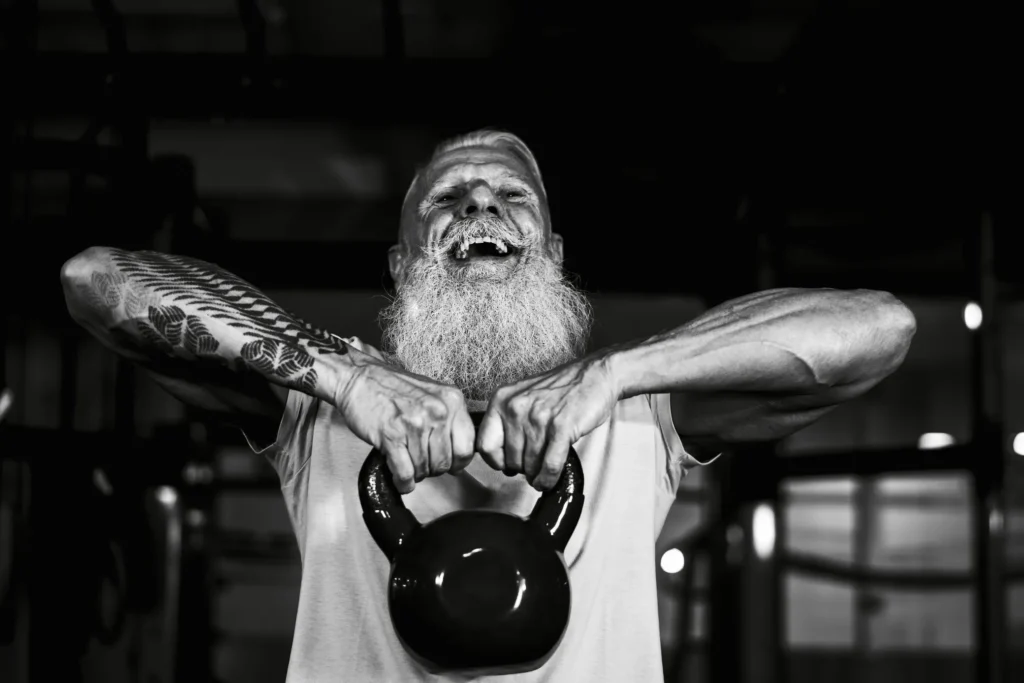
At Sisu, this engine work is our cohort training in the Training Lab: a structured, progressive program built to develop strength, aerobic capacity, and locomotion together, rather than one at a time.
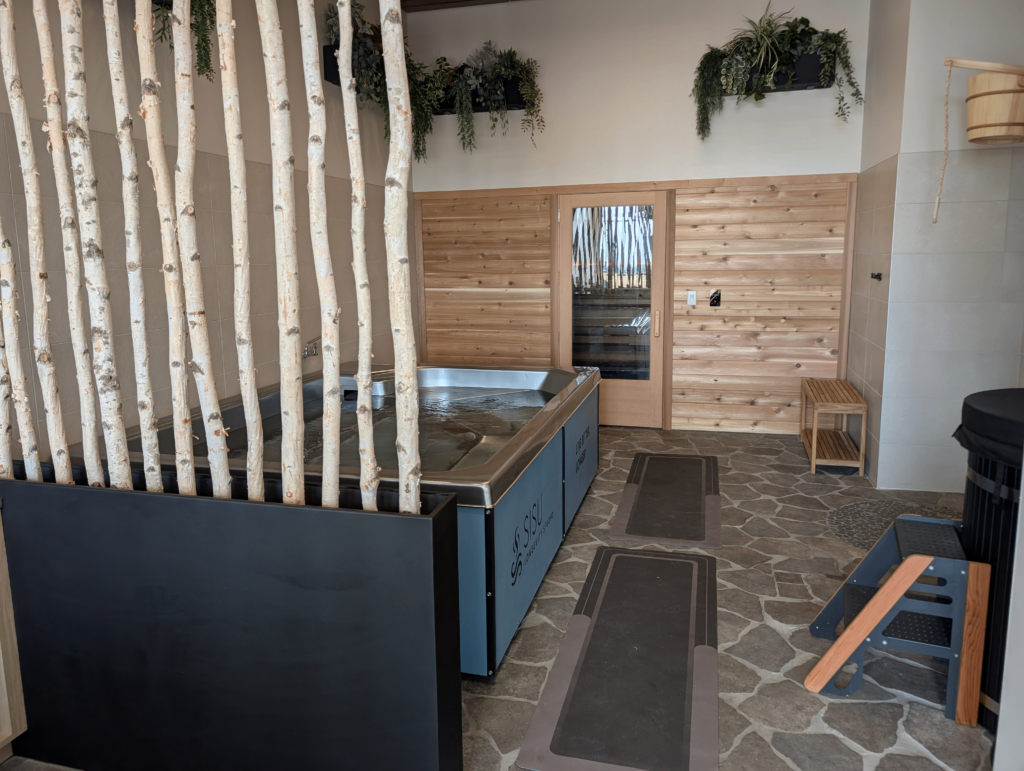
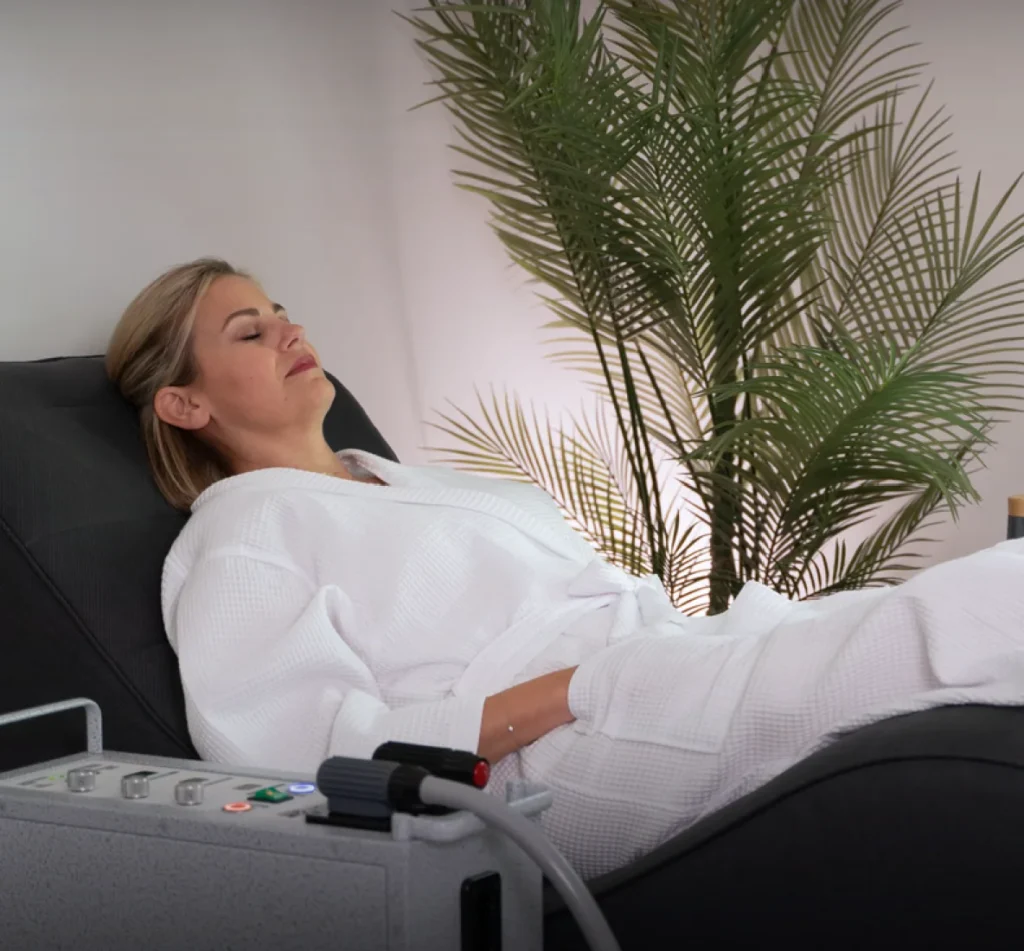
Fixing the multiplier is the part most programs ignore, and it is where good intentions go to die. Capacity only compounds if you keep showing up, and adherence is an environmental problem, not a character flaw. This is where recovery earns its place. The contrast of real Finnish sauna and cold plunge, compression, and the quiet to let the nervous system settle are not indulgences layered on top of training. They are what make hard training repeatable, week after week, for the years it takes to bend the curve. The recovery is what protects the loop.
Put simply, the training raises your capacity and the recovery keeps you in the game long enough for that capacity to matter. Pair them under one roof and you have built the exact multiplier the WHO framework describes.
Measure the engine before you rebuild it
You cannot manage what you have not measured, and intrinsic capacity is measurable. The domains that predict how you age, aerobic fitness, strength, gait, and balance, can be tested today and tracked over time.
The Sisu Strongest Decade assessment is built on exactly these markers. It is a baseline of the capacities the science says matter most, translated into a clear picture of where you stand and what to train first. It turns the abstract idea of intrinsic capacity into a number you can move, and it gives your plan a target instead of a guess.
Sisu is the environment
Return to the WHO model one last time. Functional ability equals intrinsic capacity shaped by environment, and the environment they name as an example, access to a place that gets you training and keeps you consistent, is not a metaphor for us. It is the business.
Sisu Longevity Studio was designed to be the environment that turns capacity into ability. The Training Lab raises the engine through structured, progressive work built on the same locomotion and vitality domains the research uses to define intrinsic capacity. The recovery suite, real Finnish sauna, cold plunge, compression, red light, and quiet, keeps the training sustainable so the compounding loop keeps turning in the right direction. The assessment measures where you are so the plan has a target. And the community makes showing up the easy choice, which is the whole point of an environment.
You bring the capacity. We build the environment. That is not a slogan. It is the WHO framework for healthy aging, run as a studio.
Live Better. Longer.
Frequently Asked Questions
What is the difference between intrinsic capacity and functional ability?
Intrinsic capacity is the total of your physical and mental capacities, your engine. Functional ability is that capacity shaped by your environment, what you can actually do in real life. The World Health Organization defines healthy aging around both.
Is healthy aging just the absence of disease?
No. The WHO model deliberately moves away from counting diseases and toward intrinsic capacity and functional ability, because you can be free of diagnosed disease and still lose the ability to do what matters.
Can you improve intrinsic capacity at any age?
Yes. The trainable domains, strength, aerobic fitness, and locomotion, respond to training across the lifespan, and the research shows meaningful gains well into the older decades.
What actually predicts how well you age?
Measures of capacity carry hard outcomes: grip strength, gait speed, and cardiorespiratory fitness are all independently associated with survival, and every one of them is trainable.
How does Sisu support healthy aging?
Sisu is built to be the environment the WHO model describes: structured training that raises capacity, recovery that keeps it sustainable, an assessment that measures it, and a community that makes showing up the easy choice.
Build Your Strongest Decade at Sisu
Three ways to begin:
- Schedule a free tour: see the studio, meet the team, no commitment.
- Explore membership tiers: the training, the recovery, and the full Sisu approach to longevity.
- Book your Sisu Assessment: the baseline of the capacities that predict how you age.
References
Beard, J. R., Officer, A., de Carvalho, I. A., Sadana, R., Pot, A. M., Michel, J.-P., Lloyd-Sherlock, P., Epping-Jordan, J. E., Peeters, G. M. E. E. G., Mahanani, W. R., Thiyagarajan, J. A., & Chatterji, S. (2016). The World report on ageing and health: A policy framework for healthy ageing. The Lancet, 387(10033), 2145–2154. https://doi.org/10.1016/S0140-6736(15)00516-4
Cesari, M., Araujo de Carvalho, I., Amuthavalli Thiyagarajan, J., Cooper, C., Martin, F. C., Reginster, J.-Y., Vellas, B., & Beard, J. R. (2018). Evidence for the domains supporting the construct of intrinsic capacity. The Journals of Gerontology: Series A, 73(12), 1653–1660. https://doi.org/10.1093/gerona/gly011
Fiacco, S., Mernone, L., & Ehlert, U. (2020). Psychobiological indicators of the subjectively experienced health status: Findings from the Women 40+ Healthy Aging Study. BMC Women’s Health, 20(1), 16. https://doi.org/10.1186/s12905-020-0888-x
Fragala, M. S., Cadore, E. L., Dorgo, S., Izquierdo, M., Kraemer, W. J., Peterson, M. D., & Ryan, E. D. (2019). Resistance training for older adults: Position statement from the National Strength and Conditioning Association. Journal of Strength and Conditioning Research, 33(8), 2019–2052. https://doi.org/10.1519/JSC.0000000000003230
Izquierdo, M., Merchant, R. A., Morley, J. E., Anker, S. D., Aprahamian, I., Arai, H., Aubertin-Leheudre, M., Bernabei, R., Cadore, E. L., Cesari, M., Chen, L.-K., de Souto Barreto, P., Duque, G., Ferrucci, L., Fielding, R. A., García-Hermoso, A., Gutiérrez-Robledo, L. M., Harridge, S. D. R., Kirk, B., … Fiatarone Singh, M. (2021). International exercise recommendations in older adults (ICFSR): Expert consensus guidelines. The Journal of Nutrition, Health & Aging, 25(7), 824–853. https://doi.org/10.1007/s12603-021-1665-8
Leong, D. P., Teo, K. K., Rangarajan, S., Lopez-Jaramillo, P., Avezum, A., Orlandini, A., Seron, P., Ahmed, S. H., Rosengren, A., Kelishadi, R., Rahman, O., Swaminathan, S., Iqbal, R., Gupta, R., Lear, S. A., Oguz, A., Yusoff, K., Zatonska, K., Chifamba, J., … Yusuf, S. (2015). Prognostic value of grip strength: Findings from the Prospective Urban Rural Epidemiology (PURE) study. The Lancet, 386(9990), 266–273. https://doi.org/10.1016/S0140-6736(14)62000-6
Mandsager, K., Harb, S., Cremer, P., Phelan, D., Nissen, S. E., & Jaber, W. (2018). Association of cardiorespiratory fitness with long-term mortality among adults undergoing exercise treadmill testing. JAMA Network Open, 1(6), e183605. https://doi.org/10.1001/jamanetworkopen.2018.3605
Studenski, S., Perera, S., Patel, K., Rosano, C., Faulkner, K., Inzitari, M., Brach, J., Chandler, J., Cawthon, P., Connor, E. B., Nevitt, M., Visser, M., Kritchevsky, S., Badinelli, S., Harris, T., Newman, A. B., Cauley, J., Ferrucci, L., & Guralnik, J. (2011). Gait speed and survival in older adults. JAMA, 305(1), 50–58. https://doi.org/10.1001/jama.2010.1923
Sisu Longevity Studio | 10855 Hidden Pool Heights, Suite 140 | Colorado Springs, CO 80908