
By Thom Salo, COL USA (Ret), NASM CPT, , 5x Ironman, Longevity Director
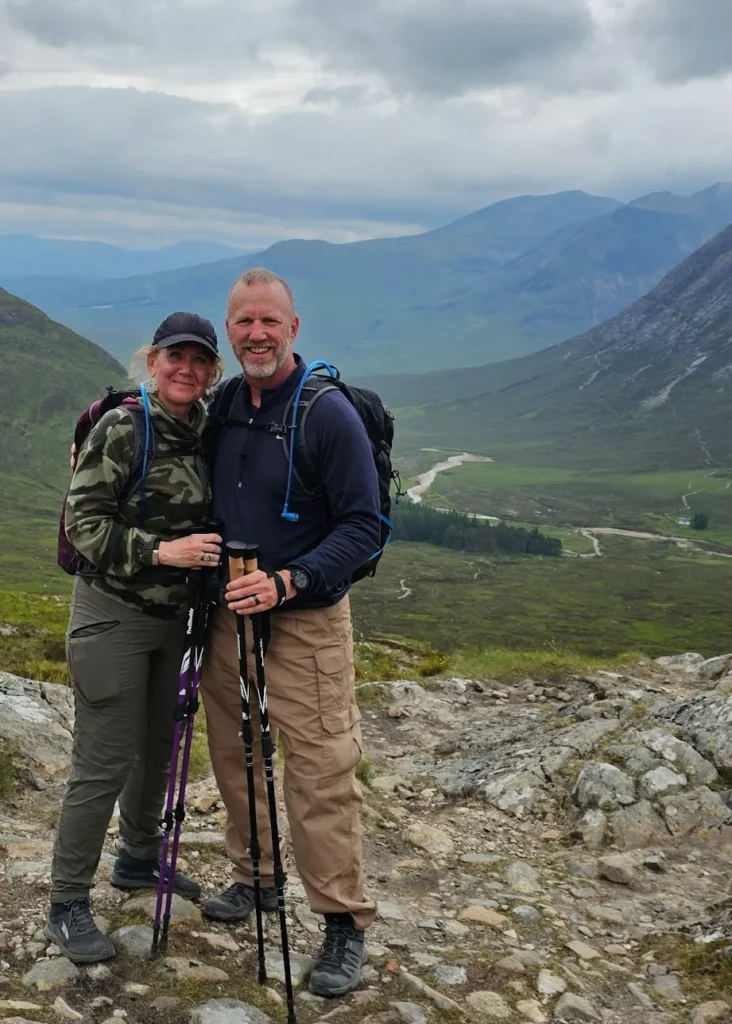
Sisu’s Longevity Training program includes a Sisu Assessment. The assessment opens with the same question, and it is not about training: what do you want to be able to do in your last decade? Hike with your grandchildren. Carry groceries up a flight of stairs without stopping. Get up off the floor without help. Ski one more season. Garden without paying for it the next day. Travel independently. Every one of those answers has a measurable cost in oxygen, muscle, bone, and balance. Together those numbers tell you whether the body you have today can carry the life you want at 75, 80, and beyond. Most people never run them. This guide explains how Sisu does, and what we do about the gap.
The marginal decade and the Strongest Decade
Dr. Peter Attia coined the phrase “marginal decade” to describe the last ten years of most people’s lives. Not the years where you are still hiking, traveling, and lifting your grandchildren. The years where the activities you love quietly drop off the list, one by one, because the body cannot do them anymore.
The marginal decade is not a medical condition. It is the result of forty years of not loading the skeleton, not pushing the cardiovascular system, and not challenging balance in any deliberate way. The body adapts to what you ask of it. Ask nothing, get nothing.
We call the inverse the Sisu Strongest Decade. Not the years you survive. The years you stay strong, capable, mobile, and on your feet. The decade where you are still the one carrying the cooler, still the one on the trail, still the one your family relies on rather than worries about. The Strongest Decade is what the assessment is measuring you against, and what the training and recovery system is designed to protect.
The math most people never run
Each goal on your Strongest Decade list has a measurable metabolic cost, expressed in METs (Metabolic Equivalents of Task). One MET equals the cost of sitting quietly. Activities scale up from there.
| Activity | MET Cost | VO2 Equivalent (mL/kg/min) |
| Walking the dog | 3.0 | 10.5 |
| Gardening | 4.0 | 14.0 |
| Carrying groceries upstairs | 5.0 | 17.5 |
| Hiking, cross-country | 6.0 | 21.0 |
| Singles tennis | 7.3 | 25.6 |
| Jogging (6 mph) | 9.8 | 34.3 |
Two principles translate that table into a training target.
The anchor is the hardest activity on your list, not the sum. If hiking for an hour at 80 is the most demanding thing on your list, your anchor is 6 METs. If singles tennis is on the list, your anchor is 7.3. The highest number sets the target.
You cannot sustain an activity at 100 percent of your VO2 max. That is a maximal effort, not something the body holds for long. For something you want to enjoy for thirty to ninety minutes, the activity has to sit at roughly 60 to 70 percent of your max. The harder the activity, the more reserve you need above the cost of doing it.
So if your anchor is hiking at 80 (6 METs, 21 mL/kg/min), your VO2 max needs to be roughly 30 to 35 mL/kg/min to make it comfortable. If your anchor is singles tennis (7.3 METs), you need 38 to 44. Then add the decline buffer. VO2 max drops about 10 percent per decade without training, half that with consistent training. If you are 50 today and want to hike comfortably at 80, the math says you need a VO2 max in the low 40s right now to land in the mid-30s thirty years from now.
There is also a floor. The independence threshold is approximately 17.5 mL/kg/min (5 METs). Below this, daily tasks (walking to the mailbox, climbing one flight of stairs, carrying a bag of groceries) become exhausting. Independent living is compromised. The Sisu Assessment does not place its action zone here. It places it well above, because the goal is not survival, it is function.
 The two engines: cardiovascular reserve and structural reserve
Longevity is built on two systems that train differently and matter equally.
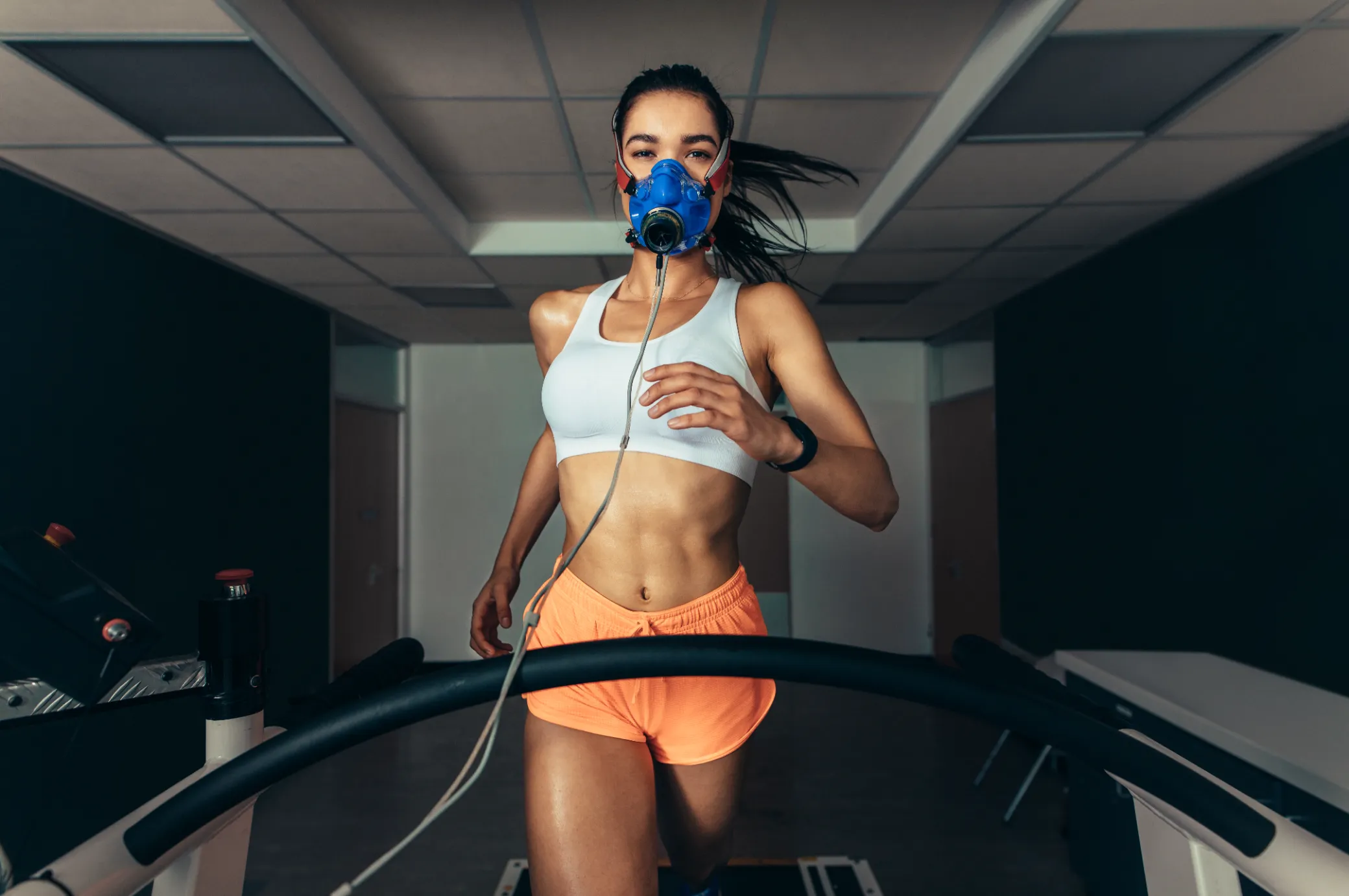
Cardiovascular reserve is your aerobic engine. VO2 max is the strongest single predictor of all-cause mortality. Mandsager et al. (2018), in a Cleveland Clinic study of 122,007 patients, found that low cardiorespiratory fitness carried greater all-cause mortality risk than smoking, diabetes, or coronary artery disease, with a roughly five-fold difference between low fitness and elite fitness. Each 1-MET increase in fitness corresponds to approximately 13 percent lower all-cause mortality (Kodama et al., 2009). The training response is preserved at every age. A meta-analysis of older adults found a pooled VO2 max improvement of approximately 16 percent with directed training (Huang et al., 2005). The body never stops listening.
Structural reserve is muscle, bone, and the ability to apply force. Resistance training is the lever that defends muscle mass against sarcopenia (the progressive loss of skeletal muscle that begins around age 30 and accelerates after 60), maintains bone density, and preserves the capacity to do everyday physical work. A 2019 meta-analysis found that resistance training associates with approximately 21 percent lower all-cause mortality independent of aerobic exercise, and approximately 40 percent lower when combined with aerobic training (Saeidifard et al., 2019). Strength training one to two times per week associates with lower all-cause and cancer mortality (Stamatakis et al., 2018).
For women, the strength conversation is also a bone conversation. Estrogen loss at menopause accelerates bone density decline. Walking, swimming, and bodyweight movement do not produce the mechanical loading that bone responds to. The skeleton needs heavy load. The LIFTMOR trial (Watson et al., 2018) tested this directly: postmenopausal women with low bone mass performed twice-weekly heavy resistance training for eight months. The high-intensity group gained bone mineral density at the lumbar spine and femoral neck. The control group lost density on the same timeline.
Bone health is also a hormonal conversation. Hormone replacement therapy, prescribed by a qualified functional medicine practitioner, is often a critical part of the bone preservation strategy for women in midlife and beyond. Sisu does not provide functional medicine services. We work alongside several excellent functional medicine practitioners in Colorado Springs and refer members whose situations call for it. Training and recovery are our domain. Hormonal management is theirs. The two work best together.
Cardiovascular reserve gets you to the activity. Structural reserve gets you through it without breaking. Both engines are required. Neither replaces the other.
The hidden levers: movement, balance, bone
Cardiovascular and strength training are the headlines. Mobility, stability, balance, and the kinetic chain that links them together are what let the headlines matter.
The body works as a chain. Force generated at the foot transfers through the ankle, knee, hip, spine, shoulder, and arm. A weak link anywhere compromises everything downstream. The mortality predictors that researchers keep finding in the data are not subtle. They are signals from the chain.
- Big toe strength predicts fall risk. The hallux is the propulsive lever of gait and the stabilizer of balance.
- Grip strength is one of the most reliable biomarkers of overall health and longevity (Bohannon, 2019). In the PURE study (Leong et al., 2015) of 139,691 adults, every 5 kg drop in grip strength corresponded to a 16 percent higher all-cause mortality risk.
- Hanging ability reflects shoulder health, grip endurance, spinal decompression, and overall upper body integrity. Most adults over 40 cannot hang for 30 seconds.
- Sit-to-stand capacity correlates directly with mortality risk. Each point lost on this simple test associates with a 21 percent increase in all-cause mortality.
These are not exotic measurements. They are the body telling you, in the language of small movements, whether the chain is intact. Sisu programming addresses the chain from the ground up, with corrective work driven by the assessment data and integrated into every coached session.
What Sisu does differently
Three pieces, working together.
1. The Sisu Method: same program, scaled individually
Sisu’s Longevity Training programming follows the Mike Boyle / MBSC model developed across decades at Mike Boyle Strength and Conditioning. The principle is simple: same program, scaled individually. Everyone in a cohort follows the same session structure. A deconditioned 55-year-old and a fit 35-year-old do the same workout. Individualization happens through regression and progression ladders within each exercise slot. One member does an assisted version. The other does a loaded version of the same pattern. Same slot, same circuit, different load. The coach knows each member’s level from their assessment data.
The tools we use are chosen for functional movement and unilateral loading rather than maximum total load: kettlebells, dumbbells, bands, and the like. Many of the adults we serve have not loaded the skeleton in twenty years. A barbell demands bilateral symmetry that most of those bodies do not have yet. The implements we choose allow loading patterns that expose asymmetries instead of masking them, and meet the body where it is rather than where the equipment assumes it should be.
 2. The Cohort
Small-group training with consistent membership outperforms every other model for the 40 to 65 demographic. Industry data shows small-group fitness retains members at rates significantly better than traditional gyms. The “7-connection rule” describes a finding consistent across health and fitness facility data: members who form seven or more social connections at a facility almost never leave. Peer-led programs outperform individual programs.
The Sisu cohort takes those findings literally. A small group of members trains together on a multi-month cycle, twice a week, on the same days. They show up to the same sessions, work the same patterns, and follow the same progression curve. By the middle of the cycle they know each other’s stories. By the end they have done what the gym industry mostly fails to do, which is build a community around training rather than around a piece of equipment.
There is no annual contract, no prepaid commitment, and no penalty for leaving. The retention is structural, not contractual. People stay because the system works, the numbers move, and the people they train with become friends.
3. The Ritual
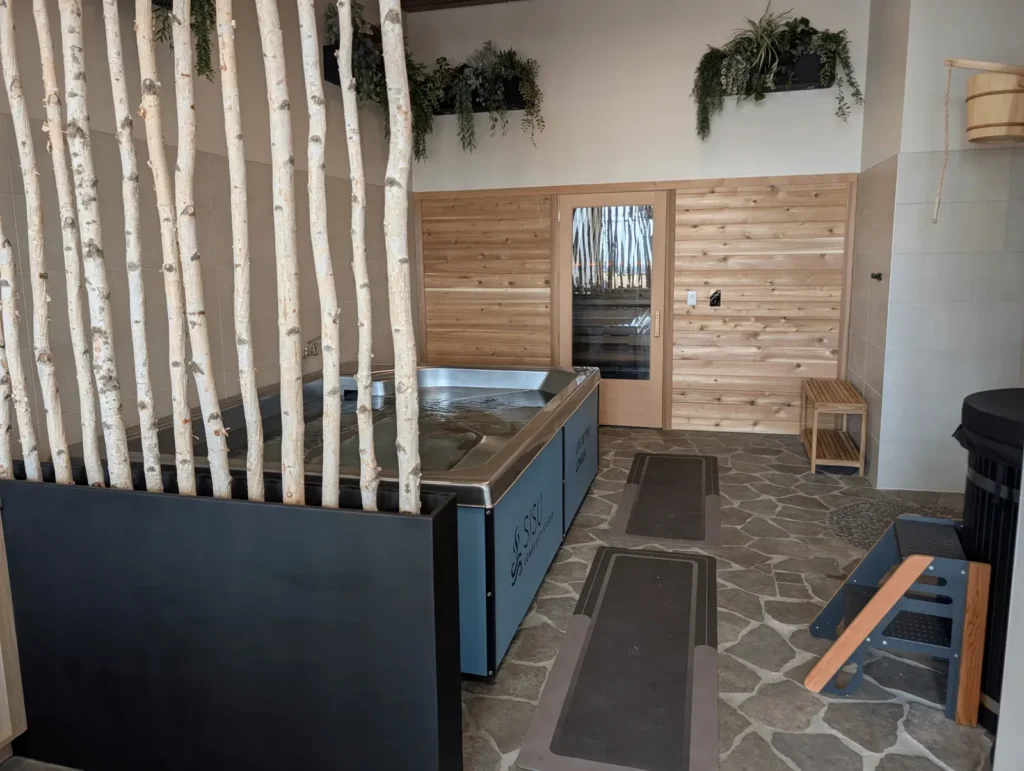
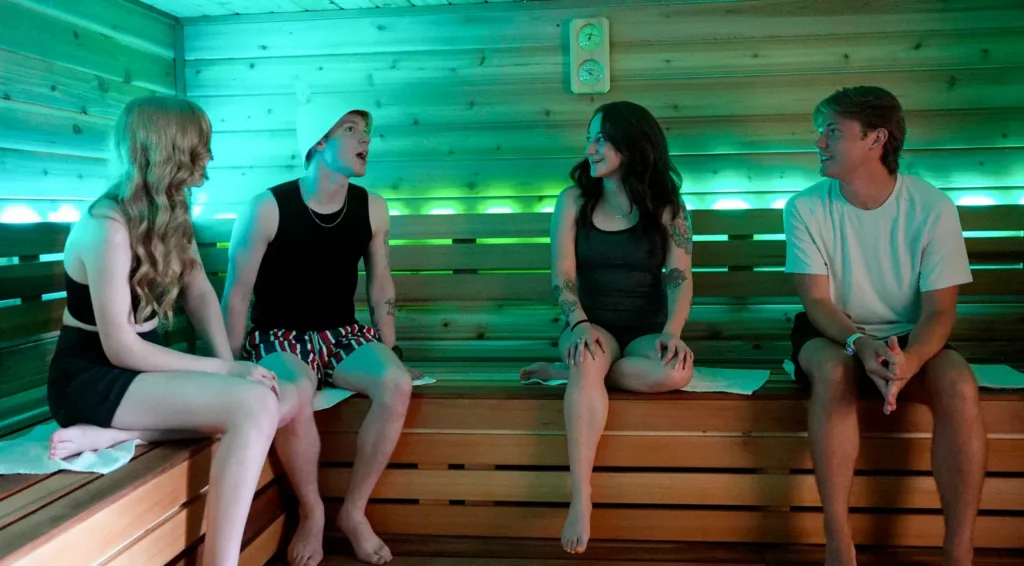
Every coached session ends the same way. Train, then sauna. The cohort walks together from the Lab to the sauna. Four seats are reserved for the group. They sit, they talk, they decompress. If the training stimulus was cardiovascular, they follow the contrast protocol (sauna, then cold plunge, ending on cold). If it was strength-dominant, sauna only, no cold for three to four hours, because cold suppresses the mTOR signaling muscles need to adapt (Roberts et al., 2015). The coach states the protocol at the end of every session.
This is not optional. It is the membership.
The Ritual is what makes the cohort sustainable for years. Recovery is built into the session flow rather than left as a separate discipline problem. The social bonds form naturally. The cardiovascular and metabolic benefits of repeated heat exposure are real and well-documented (Laukkanen & Kunutsor, 2024).
The full timing logic, including when sauna alone is right, when contrast helps, and when to skip cold entirely, is detailed in our Contrast Therapy guide.
 Cardio is your responsibility
The cohort sessions build the musculoskeletal system. Cardiovascular training builds the engine. Both are essential. Neither replaces the other, and cardio does not belong inside the cohort session.
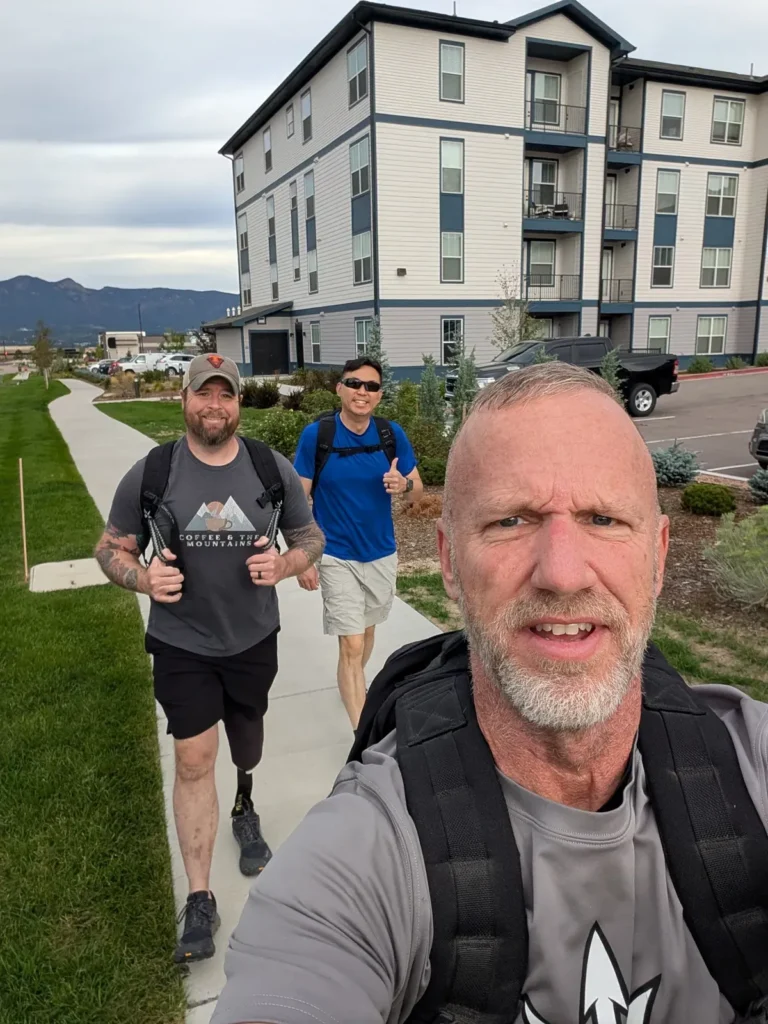
The Sisu volume target for Zone 2 (steady-state aerobic work below the first ventilatory threshold) is 180 to 240 minutes per week, distributed across three to four sessions of 45 to 60 minutes each. Brisk walking on incline, rucking with a weighted vest, cycling, rowing, swimming, easy jogging if you can keep your heart rate down, hiking with HR control. What does not count: group classes with variable intensity, “easy” runs where heart rate drifts above the threshold, anything where the pace is uncontrolled.
VO2 max intervals push the ceiling. The primary protocol Sisu teaches is the Norwegian 4×4: ten minutes warm-up, then four rounds of four minutes at 90 to 95 percent of max heart rate alternated with three minutes of active recovery, then a five-minute cool-down. New members spend their first cycle building the Zone 2 base before adding intervals (Helgerud et al., 2007).
The 80/20 rule governs the distribution. Roughly 80 percent of training time below the first ventilatory threshold, and roughly 20 percent at or above the second. The middle ground (tempo work) is minimized. Too hard for Zone 2 mitochondrial adaptation, too easy for VO2 max stimulus (Stoggl & Sperlich, 2014).
Sisu provides the protocol, the testing data that calibrates each member’s heart rate zones, and the studio equipment for interval sessions. The execution is yours. Cardio is a daily habit, not a coached event.
It’s never too early
The conversation about longevity often skips a generation. Strength training and cardiovascular conditioning are typically pitched at the 50-and-up audience because that is where decline starts becoming visible. The data does not support waiting that long.
Most adults in their 20s and 30s who train at all are training for the beach body, the marathon PR, or the bench press number. None of those are wrong. They are also incomplete. The capacities that defend the marginal decade are built decades in advance. The 30-year-old who learns to hinge correctly, hangs from a bar twice a week, and runs Zone 2 three days a week is depositing into an account they will draw on at 70.
We welcome members in every decade. Younger members are often the most efficient at learning the patterns and progressing the loads, and they build a measurement record and a community of training partners that compounds across years. Training for longevity begins the day you start.
Quick reference
| If your situation is… | Where to focus first |
| Sedentary or returning after years off | Cardiovascular base (Zone 2), basic movement patterns, balance |
| Cardio-strong but never trained strength | Resistance training, KB-based loaded work, grip and hang capacity |
| Strength-strong but no cardio | Zone 2 volume, eventually Norwegian 4×4 intervals |
| Postmenopausal with bone density concerns | Heavy resistance training (LIFTMOR-style), see also functional medicine practitioner |
| 20s-30s training for aesthetics or PRs | Add longevity-focused work alongside what you are already doing. Hinge, hang, carry, balance |
| Post-injury or post-service rebuild | Movement assessment first, kinetic chain priorities, then load |
Frequently asked questions
What is the marginal decade? The marginal decade is Dr. Peter Attia’s term for the last ten years of most people’s lives, when activities they love drop off the list because the body can no longer do them. It is the result of decades of inactivity, not aging itself.
What is the Sisu Strongest Decade? The Sisu Strongest Decade is the inverse of the marginal decade, the years where you stay strong, capable, mobile, and on your feet. It is also the framework Sisu uses to guide training and assessment. The Strongest Decade Outlook on the Sisu Assessment is a forward-looking classification (On Track, Building, or Act Now) telling members where they stand relative to their own goals.
Is 60 or 70 too late to start training for longevity? No. The training response is preserved across the lifespan. Meta-analyses of controlled trials in older adults show meaningful VO2 max improvement, strength gains, and bone density response well into the eighth decade. Sarcopenia is not a one-way ratchet. It is a response to disuse, and the response reverses when the disuse stops.
How much VO2 max do I need? The answer depends on the most demanding activity on your goal list. The math works backward from there: identify the MET cost of your anchor activity, divide by 0.65 for a comfort margin, add a decline buffer for the decades between now and your target age. The Sisu Assessment runs that math during your first appointment.
Why kettlebells instead of barbells? The adults we serve are often in their forties through seventies, many with twenty or more years away from loading the skeleton. A barbell demands bilateral symmetry that most of those bodies do not have yet. Asymmetries are the rule, not the exception, after years of disuse. Kettlebells, dumbbells, and bands allow unilateral loading that exposes asymmetries instead of masking them, and meet the body where it is.
Why train in a small group instead of one-on-one? Small-group training with consistent membership has stronger retention than one-on-one for the 40-65 demographic specifically. The “7-connection rule” describes a consistent finding: members who form seven or more social connections at a facility almost never leave. The cohort delivers progressive programming, individual coaching within a group template, and the social architecture that makes consistency easier across years.
Do I have to do Zone 2 cardio? For longevity outcomes, yes. Zone 2 is the foundation of cardiovascular reserve. Sisu’s volume target is 180 to 240 minutes per week. This is self-directed, not coached, and most of it happens outside the studio (walking, hiking, rucking, cycling). Sisu provides the protocol, the heart-rate zone calibration from your VO2 max test, and the accountability check-in at every cohort meeting.
What if I have bone density concerns? Heavy resistance training (LIFTMOR-style protocols) increases bone density in postmenopausal women with low bone mass. Loaded movement is built into Sisu programming. For women specifically, the conversation is also hormonal: hormone replacement therapy is often part of an effective bone preservation strategy, and Sisu refers members to functional medicine practitioners in Colorado Springs for that side of the equation.
Read the deep dive
This is the practical version. The longer treatment, with full citations, the LIFTMOR protocol details, the math behind the Strongest Decade Outlook, and the three illustrative member profiles, is in our white paper: The Sisu Strongest Decade: A Method for Building the Body You Need for the Life You Want at 70, 80, and Beyond.
To take the next step, schedule a Sisu Assessment at sisulongevity.com or visit us at 10855 Hidden Pool Heights, Suite 140, Colorado Springs, CO 80908.
Sisu Longevity Studio. Live Better… Longer.
Build Your Strongest Decade at Sisu
Three ways to begin:
- Schedule a free tour: see the studio, meet the team, no commitment.
- Explore membership tiers: Cohort, Open Lab, and the full Sisu approach to longevity training.
- Book your Sisu Assessment: the baseline test that informs the longevity plan.
References
- Bohannon, R. W. (2019). Grip strength: An indispensable biomarker for older adults. Clinical Interventions in Aging, 14, 1681-1691. DOI: 10.2147/CIA.S194543
- Helgerud, J., et al. (2007). Aerobic high-intensity intervals improve VO2max more than moderate training. Medicine & Science in Sports & Exercise, 39(4), 665-671. DOI: 10.1249/mss.0b013e3180304570
- Huang, G., et al. (2005). Controlled endurance exercise training and VO2max changes in older adults: A meta-analysis. Preventive Cardiology, 8(4), 217-225. DOI: 10.1111/j.0197-3118.2005.04324.x
- Kodama, S., et al. (2009). Cardiorespiratory fitness as a quantitative predictor of all-cause mortality and cardiovascular events in healthy men and women: A meta-analysis. JAMA, 301(19), 2024-2035. DOI: 10.1001/jama.2009.681
- Laukkanen, J. A., & Kunutsor, S. K. (2024). The multifaceted benefits of passive heat therapies for extending the healthspan: A comprehensive review with a focus on Finnish sauna. Temperature, 11(1), 27-51. DOI: 10.1080/23328940.2023.2300623
- Leong, D. P., et al. (2015). Prognostic value of grip strength: Findings from the Prospective Urban Rural Epidemiology (PURE) study. The Lancet, 386(9990), 266-273. DOI: 10.1016/S0140-6736(14)62000-6
- Mandsager, K., et al. (2018). Association of cardiorespiratory fitness with long-term mortality among adults undergoing exercise treadmill testing. JAMA Network Open, 1(6), e183605. DOI: 10.1001/jamanetworkopen.2018.3605
- Roberts, L. A., et al. (2015). Post-exercise cold water immersion attenuates acute anabolic signalling and long-term adaptations in muscle to strength training. The Journal of Physiology, 593(18), 4285-4301. DOI: 10.1113/JP270570
- Saeidifard, F., et al. (2019). The association of resistance training with mortality: A systematic review and meta-analysis. European Journal of Preventive Cardiology, 26(15), 1647-1665. DOI: 10.1177/2047487319850718
- Stamatakis, E., et al. (2018). Does strength-promoting exercise confer unique health benefits? A pooled analysis of data on 11 population cohorts with all-cause, cancer, and cardiovascular mortality endpoints. American Journal of Epidemiology, 187(5), 1102-1112. DOI: 10.1093/aje/kwx345
- Stoggl, T., & Sperlich, B. (2014). Polarized training has greater impact on key endurance variables than threshold, high intensity, or high volume training. Frontiers in Physiology, 5, 33. DOI: 10.3389/fphys.2014.00033
- Watson, S. L., et al. (2018). High-intensity resistance and impact training improves bone mineral density and physical function in postmenopausal women with osteopenia and osteoporosis: The LIFTMOR randomized controlled trial. Journal of Bone and Mineral Research, 33(2), 211-220. DOI: 10.1002/jbmr.3284