
Affiliation: Professor of Neuroscience and Psychology, University of California Berkeley. Director, Center for Human Sleep Science. Author of Why We Sleep: Unlocking the Power of Sleep and Dreams (2017). Host of The Matt Walker Podcast.
Sleep is the third leg of the longevity stool. The first two, training and recovery, are the work Sisu does in person. The third one happens at home, every night, and it is the one that decides whether the work in the studio compounds or fades. Matthew Walker is the researcher who has done more than anyone to translate two decades of sleep science into protocols members can actually use.
Key contribution
Walker’s lab at UC Berkeley studies how sleep affects brain health, learning and memory consolidation, emotional regulation, cardiovascular function, immune function, and overall longevity. His career has produced hundreds of peer-reviewed papers, and his 2017 book Why We Sleep moved the public conversation about sleep from “I’ll catch up on the weekend” to “this is the most underweighted health intervention available.”
Three of his findings matter most for the longevity case.
The first is that sleep is not optional for adaptation. The cardiovascular and resistance training stimulus a member receives at Sisu produces adaptation only when sleep is adequate. Growth hormone secretion, muscle protein synthesis, glucose regulation, and consolidation of motor learning all happen primarily during deep sleep. A member who trains hard and sleeps five hours is asking the body to build with materials it does not have.
The second is that chronic sleep restriction is a cardiovascular risk. Walker has consistently surfaced research showing that sleeping fewer than six hours per night corresponds to elevated risk for hypertension, atherosclerosis, and all-cause mortality. The mechanism connects directly to the cardiovascular reserve work members at Sisu are doing during the day.
The third is that sleep consistency matters as much as sleep duration. The body responds to a regular sleep window the way it responds to a regular training schedule. Late nights and irregular wake times degrade the same recovery windows that training depends on.
How Sisu applies this work
Sisu does not provide sleep coaching. Sleep is one of several areas where we educate members rather than program them.
- Training adaptation depends on sleep. When a member is not seeing the expected response in cardiovascular fitness or strength markers, sleep is one of the first variables we discuss. We do not provide a clinical sleep workup, but we ask the questions and refer when the answers warrant it.
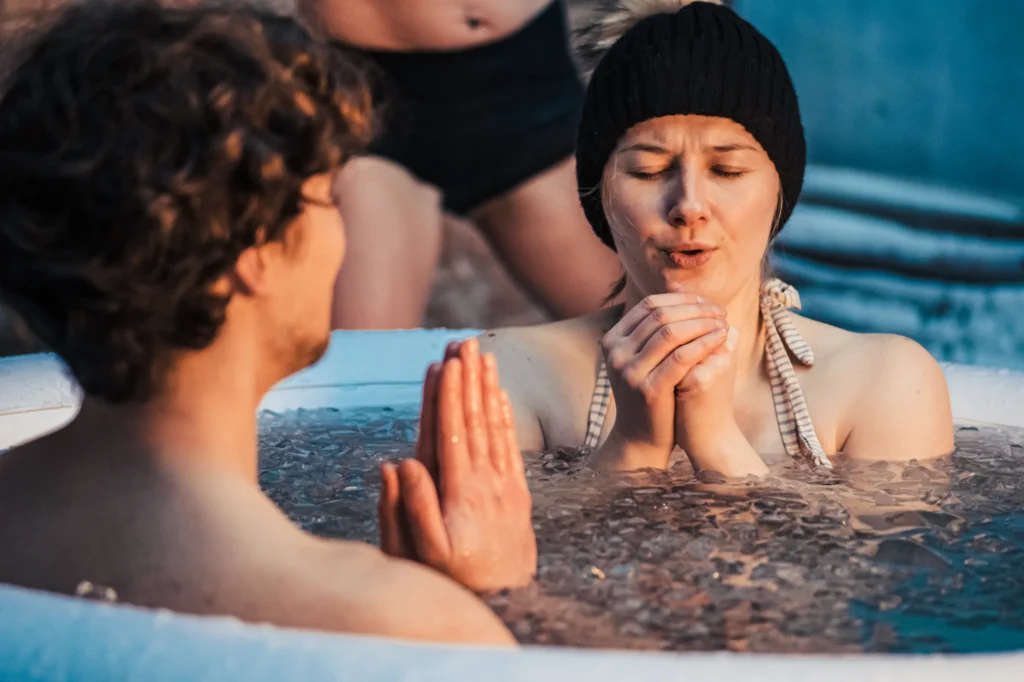
- Recovery cascades. Heat exposure, contrast therapy, and mobility work all support parasympathetic recovery and sleep quality. The Ritual at Sisu is designed in part to leave the body in a state that sleeps well that night.
- Education referral. Members who want to understand sleep at depth are pointed to Why We Sleep and The Matt Walker Podcast The science is well-developed and Walker has done the translation work.
Where to learn more
- Faculty profile: Matthew Walker at UC Berkeley
- Department profile: UC Berkeley Psychology
- Book: Why We Sleep: Unlocking the Power of Sleep and Dreams (Scribner, 2017)
- Podcast: The Matt Walker Podcast