
Restore, recharge, and build resilience
Benefits + Target Areas
Benefits for body, mind, and recovery.
Improved Circulation
Heat opens up blood vessels and cold tightens them. That back-and-forth can push more blood and oxygen to your tissues and support cardiovascular health.
Better Sleep Quality
Regular sessions can help settle the nervous system and support your circadian rhythm, which may lead to deeper, more restful sleep.
Reduced Inflammation
Alternating hot and cold may help ease muscle soreness and calm inflammation after a hard workout, a long day on the trail, or a minor injury.
Skin Health
Sweating in the sauna helps clear pores, and the cold plunge tightens skin, which can reduce puffiness and improve complexion.
Enhanced Mental Clarity and Mood
The endorphin release that comes with heat and cold can lower stress, lift your mood, and sharpen focus.
Metabolic Boost
Swinging between temperature extremes challenges your body's adaptive systems and may support metabolic health over time.
Boosted Immune Function
Short bursts of temperature stress can stimulate white blood cell activity, which may help your body defend against illness.
Lymphatic Drainage
Better circulation supports lymphatic flow, which can help reduce fluid retention and aid your body's natural recovery.
Increased Energy and Alertness
The adrenaline that comes with cold exposure can leave you awake and alert, a useful counter to fatigue.
Cardiovascular Health
Consistent contrast therapy may support heart rate variability and healthy blood pressure, both tied to long-term heart wellness.
Hear From Our Clients
Marcus Alvarado
a week ago
I had a blast checking out the facility with Thom, and did the amazing sauna they built out and it was incredible. Great experience, and fantastic amenities!
Becky O'Malley
2 weeks ago
Thom was incredibly knowledgeable and passionate about everything Sisu has to offer. We enjoyed our float and the studio is beautifully designed - a great place for training and recovering!
Sean O'Malley
2 weeks ago
Great facility. Super knowledgeable and friendly staff!
J Dubs
2 weeks ago
Has a lovely open float spa. Also has other spa stuff like red light therapy, vibrational therapy, and halotherpy and other stuff too. Check it out.
B&C Perkins
3 weeks ago
My husband and I LOVED Sisu! We’ve tried other contrast therapy places before, but this one takes the cake! We loved the atmosphere coming in and the owner is super passionate about wellness and longevity. He was so friendly and … Read more
Chris Hall
a month ago
The whole team at Sisu Longevity Studio is incredible. Thom, Leela, and Paige have all gone above and beyond to support me through recovery from multiple knee surgeries. As a family-owned and operated small business, they bring a level of … Read more
Sam Peterson
a month ago
This place epitomizes executive wellness. Between the massive sauna, group cold plunge , red light therapy, vibroacoustic sound chairs and functional fitness studio, SISU has everything that you need to keep your body and mind healthy as you age. The … Read more
Janee Bishop
2 months ago
I love how versatile Sisu is between the red light therapy, float tank, contrast therapy I’m already sucked in that’s just 3 out of 10 options! This place is a wake up call and I’ll answer from now on. Stop … Read more
Peter Harris
2 months ago
Thom is a great person who has built a fantastic recovery and functional fitness studio that fits anyone’s needs not just to put years into you life, but life in your years!
Connor Finley
2 months ago
Sisu Longevity Studio is my favorite new business. Doing the sauna for 10 minutes and then immediately dip into a cold plunge brings a sense of rejuvenation that I’ve never experienced before! It’s fun and challenging to go from extreme … Read more
Our environment, designed for longevity
Our Equipment
We built a toolkit, not a showroom. Every modality here was selected because the research backs it, then sourced from the providers who do it best. The same hard-shell hyperbaric technology used in clinical settings. The same anti-gravity treadmill trusted by professional athletes. That standard runs through everything we do.
Our Space
We designed Sisu around the belief that environment shapes outcomes. Intuitive flow between ten modalities, private changing areas, and a team present enough to guide you and experienced enough to get out of your way. This is what a serious longevity space feels like.
Our Amenities
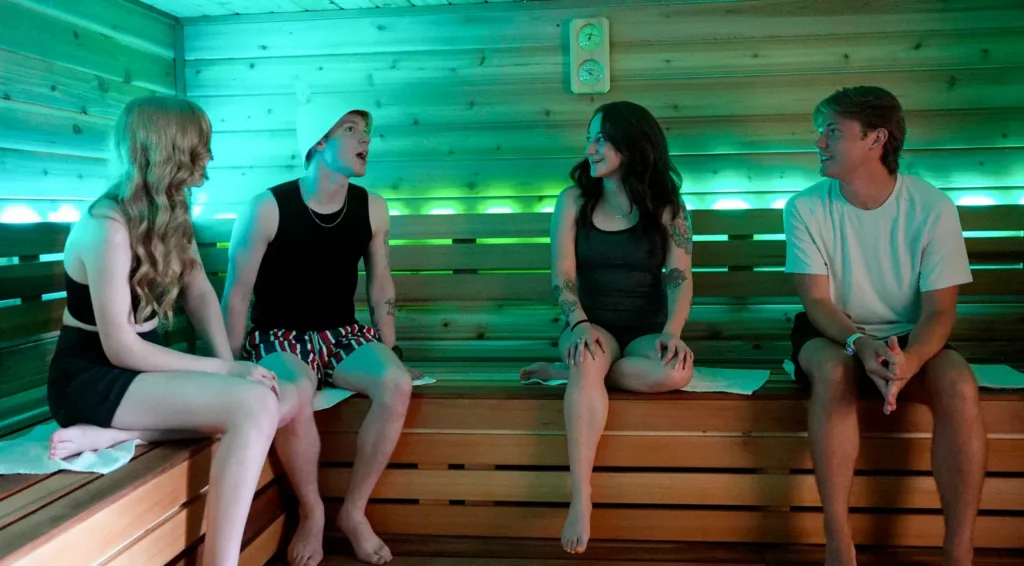
Relaxation lounge, tea service, and hydration stations. We provide bench mats for every sauna session. Bring your own towel and robe, or pick up the real thing — we carry authentic Finnish sauna textiles in-studio. Private locker rooms and showers.
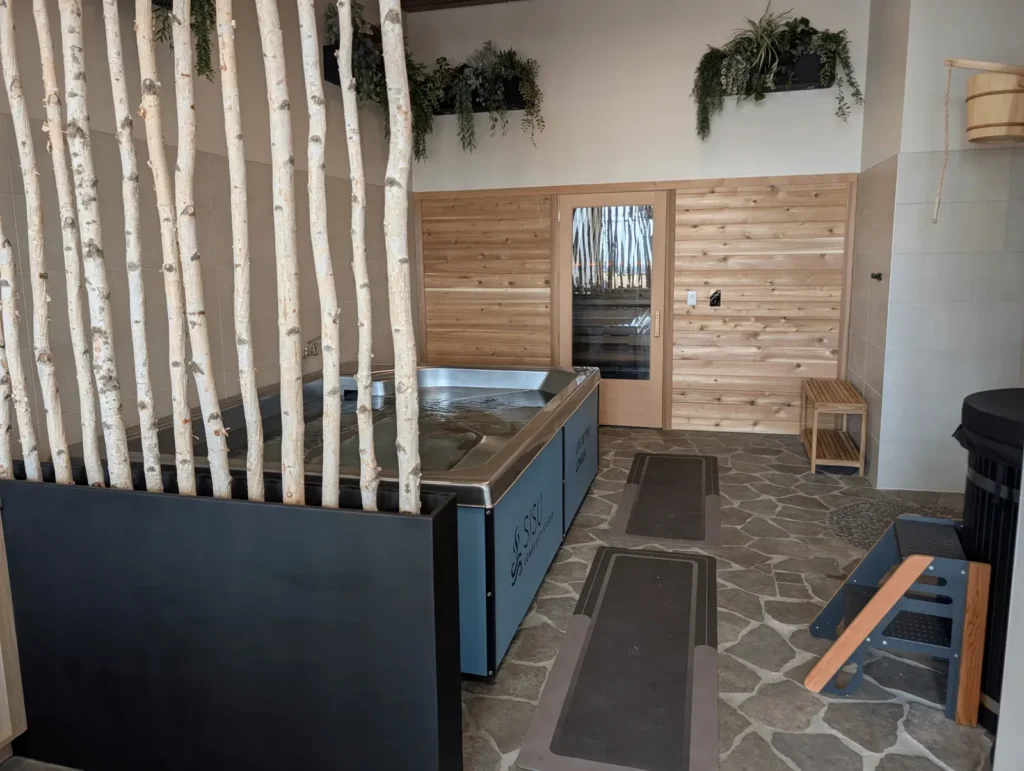
Dig in deeper with Contrast Therapy in Colorado Springs (Finnish Sauna + Cold Plunge)
View our other modalities & services
Begin to Live Better ... Longer
Improved healthspan and longevity starts with showing up. Choose a membership tier that fits your schedule and build from there. Core sessions, Premium services and coached training are all under one roof.
Experience Sisu for Yourself
Come see it. Schedule a tour and try the space before you commit.
Image Gallery
Contrast Therapy in Colorado Springs (Finnish Sauna + Cold Plunge)
Frequently Asked Questions
General Questions
What's the difference between your sauna and an "infrared saunas" at other studios?
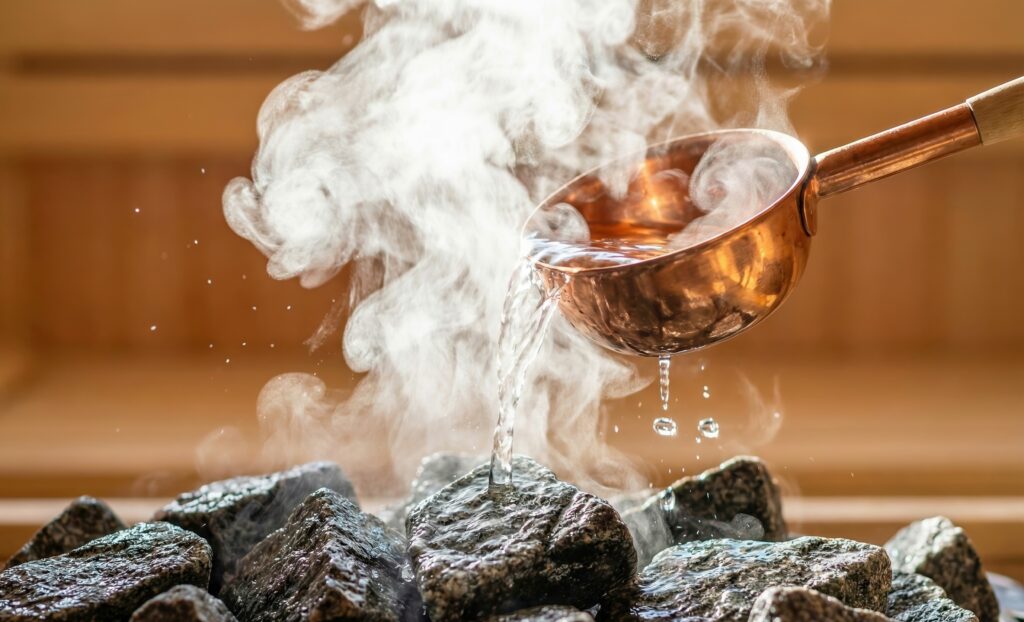
Sisu has an authentic Finnish sauna — heated rocks, water poured for steam (löyly), and air temperatures that challenge the body the way sauna has for thousands of years. Sauna is actually the only Finnish word in the English language, and it means something specific: a room heated by stones with the option for steam.
What most wellness studios call an “infrared sauna” is more accurately described as infrared heat therapy — panels inside a wooden cabinet that heat the body directly through radiant energy rather than heating the air. It’s a different experience with a different mechanism. Infrared heat therapy has its own merits, but it isn’t sauna.
At Sisu, when we say sauna, we mean the real thing.
How long is a typical contrast therapy session?
A complete contrast therapy session typically lasts 60-90 minutes, including 2-3 cycles through the sauna, cold plunge, and relaxation lounge. First-time visitors should plan for 90 minutes to allow for orientation and a comfortable pace.
Do I need to bring anything?
Bring a swimsuit, towel, and any personal hygiene items you prefer. We provide bench mats for every sauna session. Authentic Finnish sauna textiles are available in our retail shop if you want to build your own kit. Shower facilities are available before and after your session
How hot is your sauna?
Our custom-built cedar sauna is powered by a 21kW Finnleo Magma heater — a commercial-grade unit designed for continuous use. Temperature typically ranges from 170-200°F (77-93°C). The upper bench runs hotter, the lower bench milder — move between them to find your comfort level. Pour water over the heated rocks to create löyly — the Finnish word for the burst of steam that raises the felt temperature, opens the airways, and makes a real sauna feel nothing like a dry box with an infrared panel. First-timers: start on a lower bench and work your way up.
How cold is the cold plunge?
Our COLDTUB Polarplunge is maintained at approximately 45°F (7°C), though we may vary the temperature based on programming and group preferences. For those seeking a more extreme challenge, we offer the Primal Ice Barrel, a single-person plunge barrel kept at near-freezing temperatures (32-33°F / 0-1°C). The colder option is there for experienced practitioners who want to test their limits, but it’s not necessary to go that cold—you’ll receive excellent benefits at any temperature in our range.
Is the cold plunge really necessary? Can I skip it?
Cold plunge is not necessary to enjoy the sauna experience—the sauna alone offers significant benefits and can be enjoyed on its own. However, to realize the full benefit of contrast therapy, the heat and cold should be paired together. There is no “right” way to sauna, plunge, or practice contrast—”you do you.” The idea is to enjoy the experience in your own way. Many people find the cold becomes more tolerable—even enjoyable—with practice. Start with shorter immersions and work up as you build comfort and confidence.
I heard you should finish a contrast session on cold. Why is that?
There is no absolute “rule” for the order of hot and cold—you can enjoy contrast therapy however feels best to you. That said, many practitioners recommend ending on cold, based on research by Dr. Susanna Søeberg from the University of Copenhagen. Her work suggests that finishing on cold and allowing your body to rewarm naturally (without immediately jumping into a hot shower or sauna) maximizes metabolic benefits. When your body has to generate its own heat to rewarm, it activates brown fat—metabolically active tissue that burns calories. This is sometimes called the “Søeberg Principle.” Shivering after cold exposure, while uncomfortable, further enhances this effect by releasing compounds that activate brown fat thermogenesis. However, if your primary goal is relaxation rather than metabolic enhancement, ending on heat is perfectly fine. Listen to your body and choose the sequence that serves your wellness goals.
Safety Questions
Are there any contraindications?
Contrast therapy is not recommended for individuals with uncontrolled cardiovascular conditions, recent heart attack or stroke, pregnancy, or open wounds or active skin infections. If you have any cardiovascular, circulatory, neurological, or autoimmune condition, consult your physician before beginning. Cold immersion should be avoided during acute illness or fever.
What if I feel lightheaded?
Some lightheadedness when transitioning between temperatures is normal. Move slowly when standing, use the relaxation period between cycles, stay well-hydrated, and listen to your body. If you feel unwell, exit immediately and rest.
Is the water clean?
Our cold plunge uses commercial-grade filtration, UV sterilization, and ozone treatment. Combined with the inherently antimicrobial nature of cold water, this creates an exceptionally clean environment. Water quality is tested regularly.
Optimization Questions
How often should I do contrast therapy?
Benefits increase with consistency. Research suggests optimal results come from regular practice: the Laukkanen study (JAMA Internal Medicine, 2015) found greatest benefits with 4-7 sauna sessions per week, while Dr. Søeberg recommends approximately 11 minutes of cold exposure and 57 minutes of heat exposure per week, divided across 2-3 sessions. For beginners, start with 1-2 times per week and increase gradually. Listen to your body and avoid over-adaptation—the goal is to maintain the stimulus, not to build tolerance to extreme durations.
When is the best time for contrast therapy?
Morning sessions energize and prepare you for the day. Evening sessions promote sleep quality. Post-workout sessions accelerate recovery. Avoid intense contrast therapy within 1-2 hours of sleep if you’re sensitive to stimulation.
Can I do contrast therapy alone?
Yes, but we encourage the social aspect. Traditional Nordic contrast therapy is a community practice, and our spacious facilities are designed for group sessions. Solo sessions are always available for those who prefer privacy.
Book Your Finnish Sauna + Cold Plunge
A Contrast Therapy session is 60 minutes in our traditional Finnish sauna and cold plunge, with time to rest in between. Pick a day and time below.
See How We Can Help!
This content is blocked because Google Maps cookies have not been accepted.