
By Thom Salo, COL, USA (Ret), NASM CPT, 5x Ironman, Longevity Director Updated Aug 11, 2026
If you’ve lived in Colorado for a winter, flown across time zones with airplane air drying out your sinuses, finished a hard outdoor block during pollen season, or woken up with a chest that doesn’t feel quite clear, your respiratory system is asking for something. Halotherapy is one of the gentler answers. The short version: you sit quietly in a room saturated with pharmaceutical-grade salt aerosol, breathe normally, and the salt does what salt has always done to airways. This guide covers what the research shows, where it’s thin, and how to use halotherapy.
What is halotherapy?
Halotherapy (or salt therapy) is the inhalation of dry sodium chloride aerosol in a temperature- and humidity-controlled room. A device called a halogenerator grinds pharmaceutical-grade salt into particles between 1 and 5 micrometers and disperses them into the air. You sit and breathe normally for 30 to 45 minutes, and the salt aerosol reaches the upper and lower airways with each inhalation (Chervinskaya & Zilber, 1995).
The modality originated in the salt mines of Eastern Europe, where workers had unusually low rates of respiratory disease. Modern halotherapy rooms replicate that microclimate above ground.
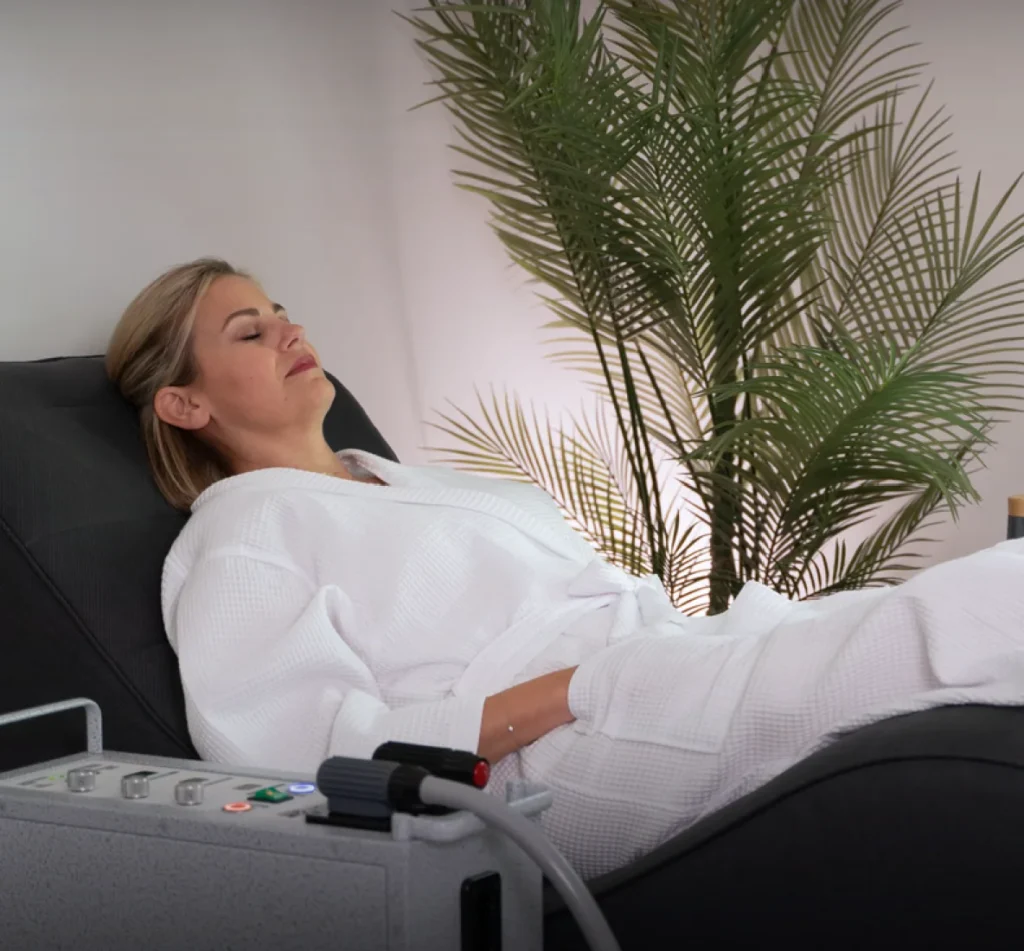
At Sisu Longevity Studio, our salt room holds 4 to 6 people per session. Reclining chairs, low warm light, and a halogenerator that runs throughout. Between halotherapy sessions, the room is also used for massage appointments and other quiet, non-heated activities.
What the research shows
Halotherapy has been studied for several decades, mostly in Eastern Europe and Russia, with smaller bodies of work from Finland, Israel, Poland, and Romania. The strongest peer-reviewed evidence focuses on bronchial hyperresponsiveness, mucociliary clearance, and quality-of-life improvements in mild respiratory conditions.
A 2014 critical review in the International Journal of Chronic Obstructive Pulmonary Disease searched the major medical databases for studies of halotherapy in COPD and found only one randomized controlled trial meeting strict inclusion criteria. The reviewers concluded that recommendations for halotherapy as a COPD therapy could not be made and called for higher-quality studies (Rashleigh et al., 2014). That’s the honest evidence base for COPD specifically.
For asthma, the evidence is stronger. A double-blind randomized controlled trial in Finland tested salt room treatment as an add-on to inhaled corticosteroid therapy in 32 asthma patients with bronchial hyperresponsiveness. Six of 16 active-treatment patients became non-hyperresponsive during the trial, compared with zero of 15 placebo patients (Hedman et al., 2006). A 2017 randomized controlled pilot study in Israeli children with mild asthma found statistically significant improvements in bronchial hyperresponsiveness and quality of life in the halotherapy group compared to a control group sitting in the same room with the halogenerator off (Bar-Yoseph et al., 2017).
A 2022 Polish study in Complementary Therapies in Clinical Practice documented statistically and clinically significant improvements in health-related quality of life in 54 patients with asthma or chronic upper respiratory tract conditions after a 3-week subterranean pulmonary rehabilitation program in the Wieliczka Salt Mine (Mętel et al., 2022).
The peer-reviewed picture is narrower than the marketing tends to suggest. Halotherapy provides measurable benefit for bronchial hyperresponsiveness in asthma, quality of life in mild respiratory conditions, and possibly inflammatory marker modulation (Lazarescu et al., 2014). It’s not a treatment for COPD or infection, and it doesn’t replace medication.
How it works
Salt helps clear airway mucus. The respiratory tract’s first defense is the mucociliary escalator: a thin layer of mucus moved upward by microscopic hair-like cilia. The cilia trap inhaled particles and move them toward the throat for elimination. Salt aerosol is hygroscopic (it draws water), and at the right particle size it thins mucus and supports ciliary movement (Chervinskaya & Zilber, 1995). This is the mechanism behind the productive cough some members notice in their first few sessions.
Salt may calm inflamed airways. The Hedman trial and the Bar-Yoseph pediatric trial both documented reductions in bronchial hyperresponsiveness, a measure of how reactive the airways are to challenge. The reduction was sustained over a multi-week treatment course (Hedman et al., 2006; Bar-Yoseph et al., 2017). The exact molecular pathway isn’t fully mapped, but the effect appears related to anti-inflammatory action on airway tissue and reduced edema.
The room itself helps. The space is dim, quiet, and free of allergens. Sitting in it for 30 to 45 minutes produces a parasympathetic shift on its own. Some of what people call “halotherapy benefit” is the rest. That’s fine. Both are real.
Quick-reference decision table
| Why are you using halotherapy? | Session length | Frequency | What to expect |
| Seasonal allergies / dry air recovery | 30 to 45 min | 1 to 2 per week during your trigger season | Reduced congestion, sometimes productive cough early on |
| Asthma adjunct (with physician care) | 30 to 45 min | 2 per week for 6 to 8 weeks, then maintenance | Possible reduction in airway reactivity over weeks |
| Altitude adjustment (travelers) | 30 min | 1 to 2 sessions in the first 3 days | Less sinus dryness, better sleep |
| Training-block respiratory support | 30 min | 1 per week during heavy blocks | Parasympathetic recovery window, clearer breathing |
| First visit / curious | 30 min | One session, see how you feel | Calm, dim, slightly salty taste, more aware of breathing |
What a session feels like
A halotherapy session is mostly stillness. You settle into a recliner, the lights dim, the halogenerator runs quietly in the corner. You’ll notice a faint salty taste on your lips within the first 5 to 10 minutes, sometimes a tickle in the back of the throat as mucus loosens. Some members fall asleep. Most simply rest.
You can read, listen to music or a podcast on personal headphones, meditate, or do nothing. Phones are allowed but discouraged. The room is shared with 3 to 5 other people, but it’s quiet enough that the experience is still naturally introspective.
After the session, the salt continues to do its work for a few hours. Hydration matters more than usual on a halotherapy day. A tall glass of water before and after.
Frequency and dose-response
The peer-reviewed protocols that have shown statistically significant outcomes use 10 to 20 sessions over 2 to 12 weeks, with sessions running 30 to 60 minutes (Chervinskaya & Zilber, 1995; Hedman et al., 2006; Bar-Yoseph et al., 2017). This is similar to the dose-response curve for other respiratory rehabilitation modalities: the accumulation produces the effect, not any single session.
For most members:
- First arc (introductory): 8 to 10 sessions over 4 to 6 weeks. Long enough to see whether you’re a responder.
- Maintenance: 1 to 2 sessions per week through trigger seasons, or weekly year-round if you find the practice useful.
- Travel/altitude: 1 to 2 sessions concentrated in the first few days of a trip.
You don’t need to be in the room daily. Two to three times per week is the research-supported cadence.
Combining halotherapy with other modalities
Halotherapy sequences well with most of the modalities on the Sisu floor:
- Halotherapy + sauna (same visit). Salt room first, sauna second. The sauna’s thermal load opens airways further and amplifies the parasympathetic shift initiated in the salt room.
- Halotherapy + cold plunge (same visit). Reasonable if you’d already planned a cold session. Cold stimulates norepinephrine and can sharpen the post-halotherapy clarity.
- Halotherapy + float therapy (different days). Both are quiet, restorative, parasympathetic-leaning. Stacking them in the same week is reasonable, but on different days so each gets its full attention.
- Halotherapy + Training Lab cohort session. A halotherapy session before or after cohort training is fine. Many members use it on Friday or Saturday as part of a respiratory-focused recovery day.
A halotherapy session at Sisu
The Sisu salt room is a shared space for 4 to 6 people per session. Reclining chairs around the perimeter, low warm light, halogenerator running quietly in the corner. Most members come alone. Some come with a friend or partner. The shared format is part of the experience: you’re in a small group, but nobody’s talking, everyone’s resting, and the room is naturally quiet.
A few things worth knowing:
- Arrive on time. Once the session starts, the door closes and we don’t let people in late. The aerosol density takes a few minutes to reach session level, and opening the door interrupts that for everyone. Plan to be in the room and seated before the start time.
- A Longevity Technician walks you through the room on your first visit and explains how the timing, lights, and music work.
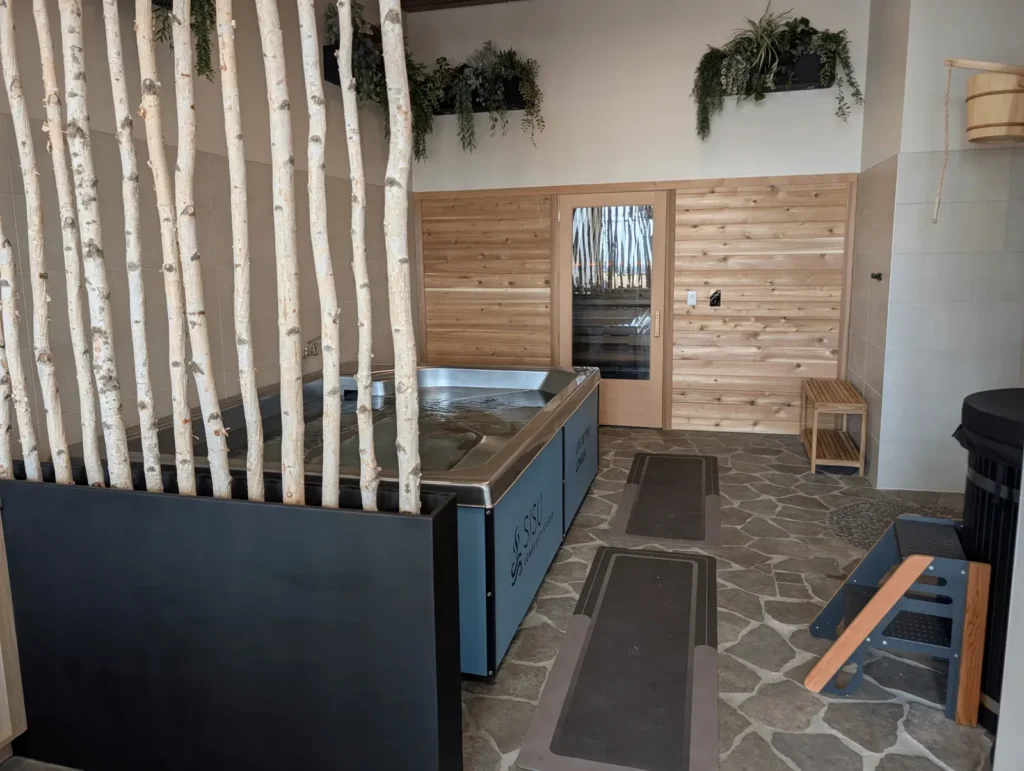
Between halotherapy bookings, the room is used for massage appointments and other quiet, non-heated activities. Members will see those uses on the booking calendar.
Experience Halotherapy at Sisu
Three ways to begin:
- Schedule a free tour: see the studio, meet the team, no commitment.
- Explore membership tiers: pricing, packs, and how halotherapy fits into the Sisu approach.
- Book a single session: drop in and try it.
Related modalities at Sisu
- Float therapy: nervous system recovery through sensory reduction, often used in combination with halotherapy for respiratory-and-nervous-system recovery days.
- Contrast therapy: thermal stress and autonomic training through alternating sauna and cold plunge.
- mHBOT (mild hyperbaric oxygen therapy): oxygen-enriched, pressurized recovery, particularly valuable at altitude.
- Red light therapy: cellular-level recovery through photobiomodulation.
This article is for educational purposes and is not medical advice.
Live Better … Longer.
References
- Bar-Yoseph, R., Kugelman, N., Livnat, G., Gur, M., Hakim, F., Nir, V., & Bentur, L. (2017). Halotherapy as asthma treatment in children: A randomized, controlled, prospective pilot study. Pediatric Pulmonology, 52(5), 580-587. DOI: 10.1002/ppul.23621
- Chervinskaya, A. V., & Zilber, N. A. (1995). Halotherapy for treatment of respiratory diseases. Journal of Aerosol Medicine, 8(3), 221-232. DOI: 10.1089/jam.1995.8.221
- Hedman, J., Hugg, T., Sandell, J., & Haahtela, T. (2006). The effect of salt chamber treatment on bronchial hyperresponsiveness in asthmatics. Allergy, 61(5), 605-610. DOI: 10.1111/j.1398-9995.2006.01073.x
- Lazarescu, H., Simionca, I., Hoteteu, M., Munteanu, A., Rizea, I., Iliuta, A., Dumitrascu, D., & Dumitrescu, E. (2014). Surveys on therapeutic effects of “halotherapy chamber with artificial salt-mine environment” on patients with certain chronic allergenic respiratory pathologies and infectious-inflammatory pathologies. Journal of Medicine and Life, 7(Spec Iss 2), 83-87. PMC: PMC4391365
- Lăzărescu, H., Simionca, I., Hoteteu, M., & Mirescu, L. (2014). Speleotherapy: modern bio-medical perspectives. Journal of Medicine and Life, 7(Spec Iss 2), 76-79. PMC: PMC4391363
- Mętel, S., Kostrzon, M., Adamiak, J., Gattner, H., Sintonen, H. P., & Horst, R. (2022). Pulmonary rehabilitation in subterranean chambers combined with neuro-orthopedic activity-dependent plasticity therapy influences patients’ quality of life: a preliminary study. Complementary Therapies in Clinical Practice, 48, 101609. DOI: 10.1016/j.ctcp.2022.101609
- Rashleigh, R., Smith, S. M. S., & Roberts, N. J. (2014). A review of halotherapy for chronic obstructive pulmonary disease. International Journal of Chronic Obstructive Pulmonary Disease, 9, 239-246. DOI: 10.2147/COPD.S57511