
By Thom Salo, NASM CPT, COL USA (Ret), 5x Ironman, Longevity Director Updated July 21, 2026
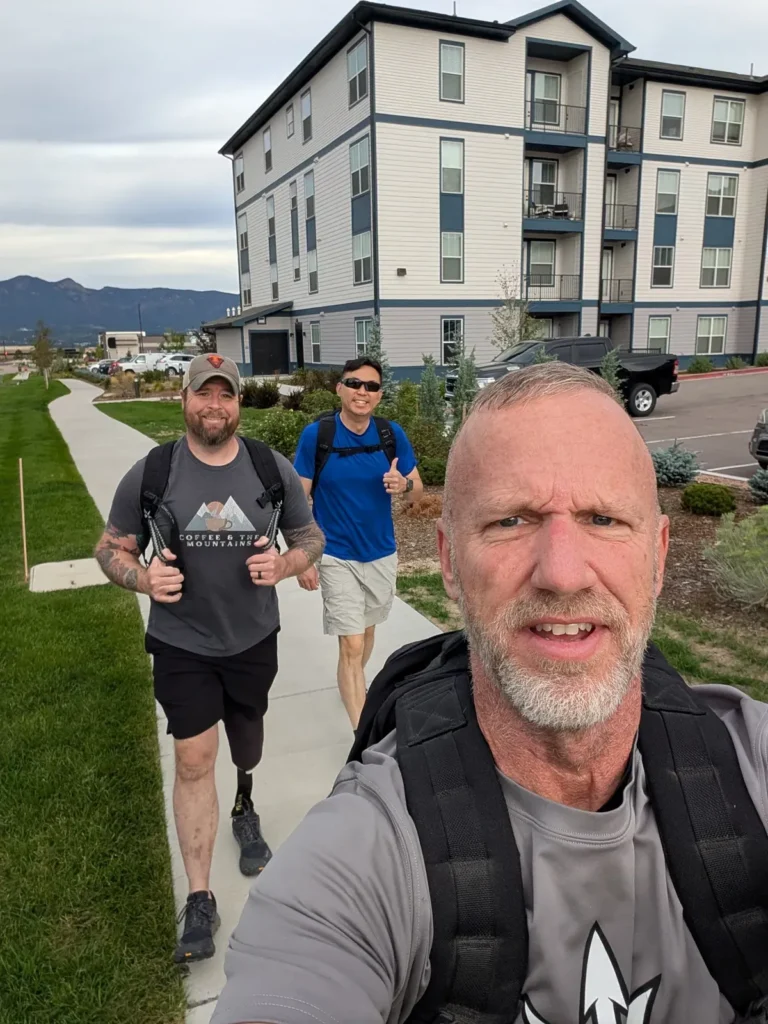
I recall the first time I used compression therapy. I was at one of the many Ragnar races I’ve done over the years. In the athletes’ village there was a vendor booth, I believe it was Normatec, demonstrating their leg sleeves. It was the end of the event and my legs were pretty shot. I had completed my three legs, which exceeded marathon distance. The line to try the compression garments was long and normally I don’t wait in those situations. But this time I did. I’m glad I did. It was frankly amazing how my legs felt after only about 10 minutes. From that experience, I wanted to include compression therapy at Sisu. It’s a simple modality, but the benefit is real. The cost of a quality system puts it out of reach for most home use. It did for me. Including it at Sisu makes it accessible.
Pneumatic compression is one of the most accessible recovery tools at Sisu. Twenty to thirty minutes lying back with the boots inflating around the legs, and most people get up feeling lighter, looser, and ready for the next thing. The technology has been used in hospital settings for decades to manage circulation in patients at risk for blood clots and lymphedema. The wellness version of the same technology, including the Normatec 3.0 system at Sisu, uses dynamic pneumatic compression for athletic recovery, recovery after long travel days, and ongoing leg comfort in adults who sit, stand, or train for long hours.
What is Pneumatic Compression Therapy?
Pneumatic compression therapy uses inflatable garments, typically boots that cover the legs from foot to upper thigh, to apply rhythmic, sequential pressure to the limbs. A small pump inflates a series of overlapping chambers in the garment, working from the feet upward in a wave-like sequence, then deflating before the next cycle begins. The pressure can be adjusted by the user, and a typical session runs 20 to 30 minutes.
The mechanical effect is straightforward. The sequential inflation milks venous blood and lymphatic fluid out of the lower legs, against gravity, back toward the central circulation. Then the boots release, the legs refill with fresh arterial blood, and the cycle repeats. Over the course of a session, the legs cycle through many of these wave-and-release cycles, accelerating the natural drainage that walking and active movement normally produce.
Most users describe the experience as a moving, rhythmic massage. The boots are not painful at standard wellness-market pressures. The sensation is firmer at peak compression and lighter at release, and the wave pattern moves up the legs over a few seconds.
The technology was originally developed for clinical use. Hospital-grade sequential compression devices have been used since the 1970s to prevent deep vein thrombosis in immobile post-surgical patients and to manage lymphedema in patients with compromised lymphatic drainage. The wellness-market spinout, with brands such as Normatec, brought the technology into athletic recovery and the consumer market in the mid-2000s.
The Science: What Compression Does
Three effects of pneumatic compression are well-documented:
Enhanced venous return. The sequential pattern of compression creates a wave that moves venous blood from the periphery back toward the heart, working with the one-way valves in the leg veins. The mechanical assist is meaningful enough that hospital protocols use sequential compression devices specifically to prevent venous stasis and the clotting risk it produces in immobile patients.
Lymphatic drainage support. The lymphatic system has no central pump. Lymph moves through the body in response to muscle contraction, breathing, and external pressure. Pneumatic compression produces consistent rhythmic external pressure that supports lymphatic clearance, useful when the body has accumulated metabolic waste from training, retained fluid from prolonged sitting or standing, or simply needs help moving fluid that the muscles have not been working to move.
Acute gains in leg flexibility. Sands and colleagues at East Tennessee State University documented in a 2014 Journal of Strength and Conditioning Research trial that 15 minutes of peristaltic pulse pneumatic compression produced statistically significant gains in lower-leg flexibility immediately after the session (Sands et al., 2014). This helps explain the looseness most users report when they stand up after a session.
Sisu’s Role: A Wellness Facility, Not a Medical Provider
Pneumatic compression has both clinical and wellness applications. The same basic technology is used in hospitals to prevent deep vein thrombosis in immobile patients, to manage lymphedema, and to support post-surgical recovery. A clear boundary statement is in order before going further.
Sisu Longevity Studio is a wellness facility. We are not a medical facility. We do not employ physicians or licensed therapists in a clinical capacity, we do not diagnose or treat medical conditions, and we do not provide compression therapy as a clinical or medical-prescription service. The Normatec 3.0 system at Sisu and the rest of the modalities at the studio are wellness tools, not medical treatments.
For members in active medical care or formal rehabilitation, Sisu plays a supporting role. We work with care providers. We welcome members who wish to use compression therapy as part of a recovery protocol prescribed or recommended by their own physician, surgeon, or therapist.
What we won’t do is inject ourselves into the patient-provider relationship. Members with diagnosed venous disease, active deep vein thrombosis, severe peripheral artery disease, uncompensated congestive heart failure, open wounds in the legs, fresh fractures, active skin infections, or other contraindications should consult their physician before using pneumatic compression. Sisu’s medical clearance process is designed to identify these conditions before the first session.
Sisu provides the tool and the space. The clinical judgment stays where it belongs.
What Makes Sisu’s Compression Different
I chose the Normatec 3.0 by Hyperice for the studio because it’s the system I used through five Ironman builds. It’s the professional-grade pneumatic system found in elite sports teams, Olympic training centers, and the recovery rooms of the major endurance brands. A few details matter.
Sequential, multi-chamber pressure. The Normatec 3.0 boots use a true wave pattern, with overlapping chambers per leg inflating in precise sequence from the foot upward. Lower-tier consumer compression devices typically use fewer chambers and produce a less effective pumping action.
Calibrated, adjustable pressure. The system delivers consistent, calibrated pressure across a wide range of settings, allowing the user to find the level that produces the right firmness without discomfort. Sessions at Sisu start with a coach or technician walking the user through the calibration process; subsequent sessions are typically run independently.
Full-leg coverage. Sisu uses the full-leg boot configuration, covering the leg from foot to upper thigh. Many home and spa-grade compression devices cover only the calves or stop mid-thigh.
Integration with the rest of recovery. The Normatec is one tool in a broader recovery stack at Sisu. Members typically pair compression with another modality on the same visit, such as sauna and compression, contrast therapy and compression, or mHBOT and compression, depending on the goal. The studio is built to support this kind of integrated session, not to deliver compression as an isolated, transactional service.
What a Session Looks Like at Sisu
A typical compression session at Sisu runs 20 to 30 minutes.
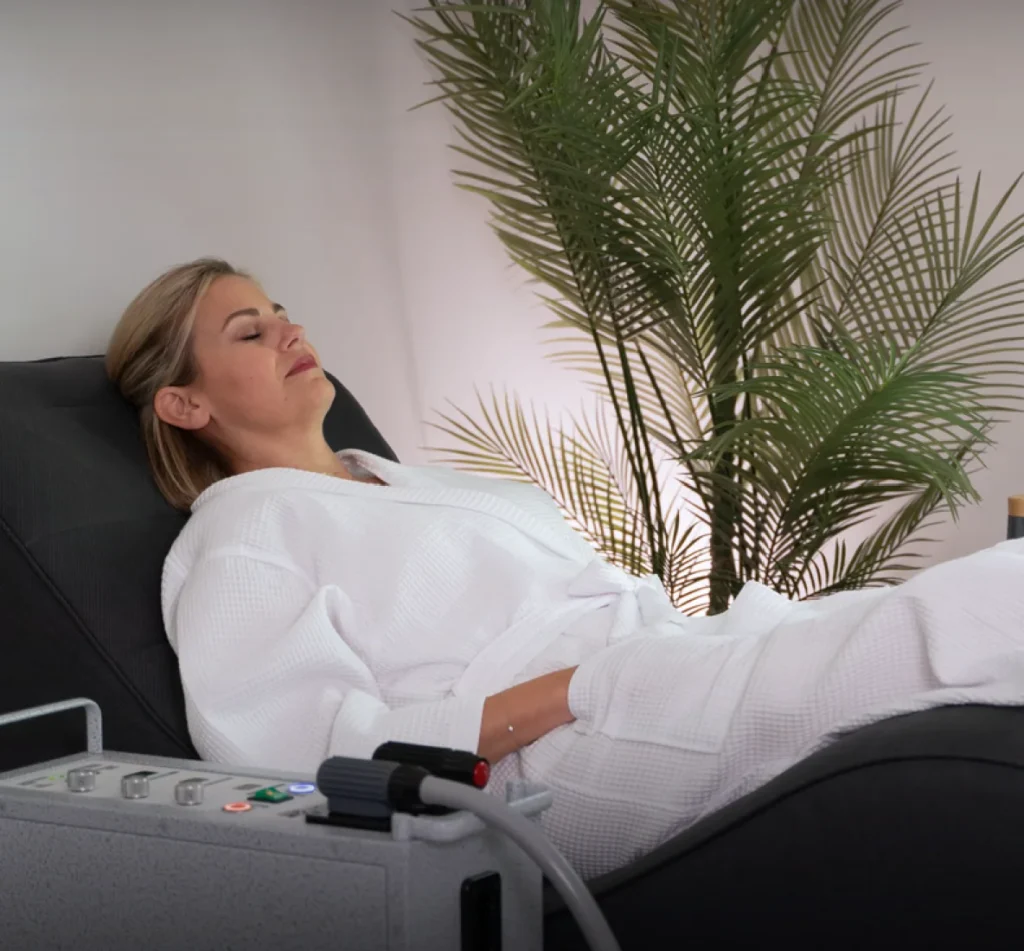
The user changes into comfortable clothing, settles into a recliner in the recovery area, and slides on the Normatec boots. Sisu staff walk through the calibration and pressure setup for the first session; subsequent sessions are run independently. The boots inflate and deflate in a rhythmic wave pattern from the feet upward over the duration of the session.
During the session, the user can read, listen to music or a podcast, or close their eyes and rest. Many members stack compression with another recovery modality on the same visit to make full use of the time.
The session ends when the timer completes. Most users report the legs feel lighter, looser, and more comfortable immediately, with the effect persisting through the evening or the next day.
Experience Compression Therapy at Sisu
Three ways to begin:
- Schedule a free tour: see the studio, meet the team, no commitment.
- Explore membership tiers: pricing, packs, and how compression therapy fits into the Sisu approach.
- Book a single session: drop in and try it.
References
- Sands, W. A., Murray, M. B., Murray, S. R., McNeal, J. R., Mizuguchi, S., Sato, K., & Stone, M. H. (2014). Peristaltic pulse dynamic compression of the lower extremity enhances flexibility. Journal of Strength and Conditioning Research, 28(4), 1058-1064. DOI: 10.1519/JSC.0000000000000244
Sisu Longevity Studio | 10855 Hidden Pool Heights, Suite 140 | Colorado Springs, CO 80908