
By Thom Salo, COL USA (Ret), NASM CPT, , 5x Ironman, Longevity Director Sisu Longevity Studio · Colorado Springs, CO · April 23, 2026
The Question That Starts Every Sisu Assessment
Every Sisu Assessment opens with the same question, and it is not about training.
What do you want to be able to do in your last decade?
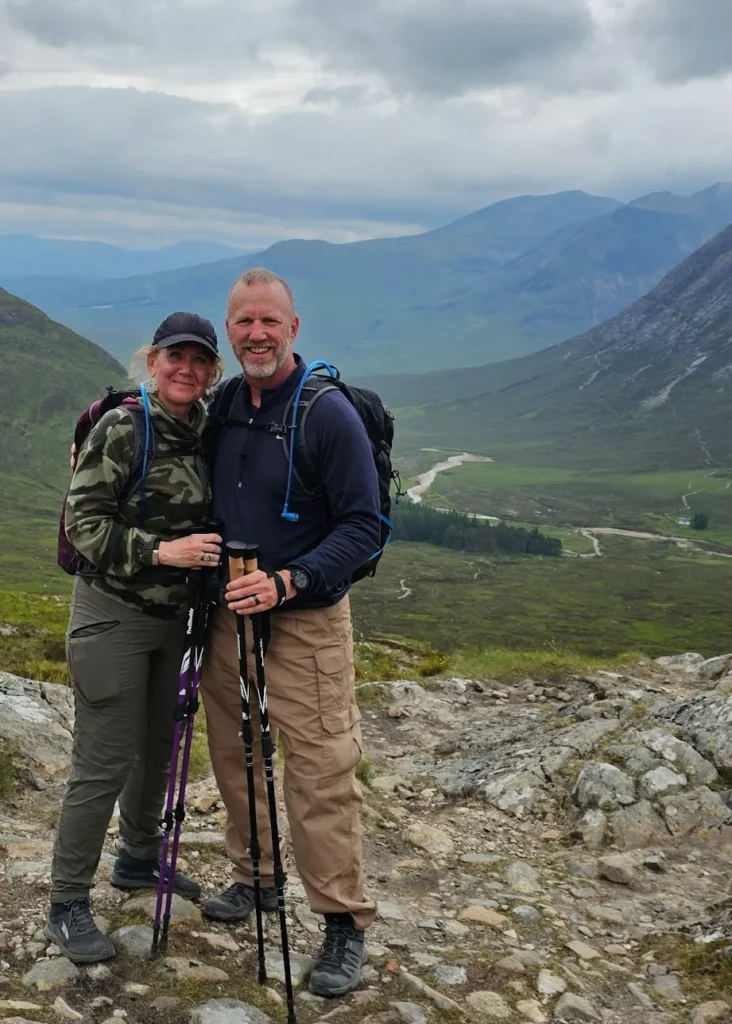
Hike with your grandchildren. Carry groceries up a flight of stairs without stopping. Get up off the floor without help. Ski one more season. Garden without paying for it the next day. Travel independently. Show up at your grandson’s wedding in your eighties looking like someone who still walks into a room under his own power.
Every one of those answers is measurable. It has a metabolic cost, expressed in METs (Metabolic Equivalents of Task), and it has structural demands on muscle, bone, balance, and grip. Together, those numbers tell you whether the body you have today can carry the life you want at 75, 80, and beyond.
Most people never run those numbers. They assume aging is the cause of decline. It isn’t. Disuse is.
This paper is the long version of what we tell every member at their first assessment: here is what your goals actually demand, here is where you are today, here is the gap, and here is the system Sisu uses to close it.
The Marginal Decade and the Strongest Decade
Dr. Peter Attia coined the phrase “marginal decade” to describe the last ten years of most people’s lives. Not the years where you are still hiking, traveling, and lifting your grandchildren. The years where the activities you love quietly drop off the list, one by one, because the body cannot do them anymore.
The marginal decade is not a medical condition. It is the cumulative result of forty years of not loading the skeleton, not pushing the cardiovascular system, and not challenging balance in any deliberate way. The body adapts to what you ask of it. Ask nothing, get nothing.
Michael Easter, in The Comfort Crisis, makes the argument plainly. The human body evolved to be under load, under heat and cold stress, and under physical demand. Modern life has stripped most of that stress out. We sit, we stay temperature-controlled, we drive instead of walking, and we lift nothing heavier than a laptop. The body responds to that absence of stimulus exactly the way you would expect. It softens. It loses muscle. It loses bone. It loses the capacity to do the things it evolved to do effortlessly. We are designed to be stressed and under load, just the right kind of stress, and for most adults in modern life that stress has been engineered away.
The fitness industry has not solved this. It has convinced two generations of adults that staying active means walking the dog and using the elliptical, and that has produced a population that arrives in its sixties without the structural reserve to defend independence.
We call the inverse of all this the Sisu Strongest Decade. Not the years you survive. The years you stay strong, capable, mobile, and on your feet. The decade where you are still the one carrying the cooler, still the one on the trail, still the one your family relies on rather than worries about. The Strongest Decade is what the assessment is measuring you against, and it is what the training and recovery system is designed to protect.
The numbers behind the decline are not subtle.
- Muscle mass declines 3 to 8 percent per decade after age 30, accelerating after 60 (Mitchell et al., 2012). The clinical name is sarcopenia (Cruz-Jentoft et al., 2019).
- VO2 max declines approximately 10 percent per decade in sedentary adults. Up to half of that decline is inactivity, not biology. Trained individuals reduce the rate to roughly 5 percent per decade.
- Grip strength weakens slowly enough that no one notices until it predicts something serious. In the PURE study of 139,691 adults across 17 countries, every 5 kg drop in grip strength corresponded to a 16 percent higher all-cause mortality risk (Leong et al., 2015).
- Gait speed deteriorates so gradually that people compensate without recognizing the change. By the time the shuffle is visible, the underlying capacity has been gone for years.
- Balance degrades silently. Falls become the leading cause of injury death in adults 65 and older. Most of those falls are preventable.
None of this is aging. All of it is the price of forty years of disuse. And the cost is paid in the decade you most wanted to enjoy.
The Independence Cliff: Where the Math Stops Working
There is a number below which daily life becomes a crisis. It is approximately 17.5 mL/kg/min of VO2 max, or 5 METs.
That is the metabolic cost of walking to the mailbox, climbing a single flight of stairs, or carrying a bag of groceries. Below this floor, those tasks cause genuine exhaustion. Independent living is compromised. Most adults who reach this point in their seventies or eighties do not see the cliff coming, because the decline was a smooth curve and the cliff is a sudden inability to do what you did six months ago.
The math is unforgiving. If your VO2 max is 35 mL/kg/min at age 50 and you do not train, you will lose roughly 3.5 mL/kg/min per decade. By 80 you are at 24.5. By 85 you are at 22.7. The first morning you cannot carry the laundry basket to the second floor without sitting down halfway up, you are already approaching the cliff.
The mortality data tells the same story even more starkly. Mandsager et al. (2018), in a Cleveland Clinic study of 122,007 patients undergoing exercise treadmill testing, found that low cardiorespiratory fitness carried greater all-cause mortality risk than smoking, diabetes, or coronary artery disease. Mortality declined progressively with each fitness level, with no upper limit of benefit identified. The difference in mortality risk between low fitness and elite fitness was approximately five-fold. The single most-evidence-backed intervention in longevity is not a supplement, a drug, or a diet. It is training. Kodama et al. (2009), in a meta-analysis of 102,980 adults, found that each 1-MET increase in cardiorespiratory fitness corresponded to approximately 13 percent lower all-cause mortality, with no upper limit of benefit identified. Fitness keeps paying off.
The independence threshold is not a target. It is a floor. The Sisu Strongest Decade Outlook places the action zone well above 17.5 mL/kg/min, because the goal is not survival. It is function.
Working Backward from the Activity You Love
Every Strongest Decade conversation moves quickly to a list. I want to be able to hike Pikes Peak with my grandkids. I want to ski with my husband at 75. I want to garden without it wrecking me. I want to keep traveling.
Each item on that list has a measurable metabolic cost.
| Activity | MET Cost | VO2 Equivalent (mL/kg/min) |
| Walking the dog | 3.0 | 10.5 |
| Gardening | 4.0 | 14.0 |
| Carrying groceries upstairs | 5.0 | 17.5 |
| Hiking, cross-country | 6.0 | 21.0 |
| Singles tennis | 7.3 | 25.6 |
| Jogging (6 mph) | 9.8 | 34.3 |
Two principles govern how those numbers translate into a training target.
The anchor is the hardest activity on your list, not the sum. METs measure the intensity of one activity at one moment. If hiking for an hour is the most demanding thing you want to do at 80, your anchor is 6 METs. If singles tennis is on your list, your anchor is 7.3. The highest number sets the target.
You cannot sustain an activity at 100 percent of your VO2 max. That is a maximal effort. The body cannot hold it for long even in trained athletes, and untrained adults reach exhaustion within minutes. For an activity you want to enjoy for thirty to ninety minutes, it has to sit at roughly 60 to 70 percent of your max. The difference between that 60 percent and 90 percent is the difference between a good day on the trail and a death march.
So if your anchor is hiking (6 METs, or 21 mL/kg/min), your VO2 max needs to be at least 30 to 35 mL/kg/min to make the activity comfortable. If your anchor is singles tennis (7.3 METs, 25.6 mL/kg/min), you need 38 to 44 mL/kg/min. The harder the activity, the more reserve you need above the cost of doing it.
Then add the decline buffer. VO2 max drops roughly 10 percent per decade without training, half that with consistent training. If you want to hike comfortably at 80 and you are 50 today, the math says you need a VO2 max in the low 40s right now to land in the mid-30s thirty years from now, even with consistent training. If you are 50 today with a VO2 max of 32, the math says you have a decision to make.
The Sisu Assessment runs that math during your first appointment. The gap between where you are and where your goal demands you to be becomes the training prescription. It is not abstract. It is not a percentile against the sedentary population that is itself sliding toward the cliff. It is the specific gap between your current reserve and the reserve you will need to live the life you described.
The Ceiling Is Higher Than You Think
Before someone agrees the gap is closable, they usually need to see how high the ceiling actually goes.
Norwegian triathlete Kristian Blummenfelt reportedly recorded a VO2 max of 101.1 mL/kg/min in 2024, the first athlete to break 100. The human range runs from roughly 15 to 100, and where you land is mostly a function of training and consistency. Approximately 47 percent of VO2 max is heritable based on the HERITAGE Family Study (Bouchard et al., 1999). The other 53 percent is response to stimulus.
The ceiling holds at age too. Hiromu Inada completed the IRONMAN World Championship in Kona at age 85 (16:53:49). Natalie Grabow completed Kona at age 80 (16:45:26), and she did not start triathlons until she was 60. An IRONMAN at back-of-pack pace sustains approximately 5 to 6 METs for seventeen hours, requiring a VO2 max of 30 to 35 mL/kg/min at 85. That is an enormous gap from the independence cliff at 17.5. The difference is not a different body. It is forty years of being asked to do something.
The training response is preserved across the lifespan. A meta-analysis of controlled trials in older adults found a pooled improvement of approximately 16 percent in VO2 max with directed training, regardless of starting fitness or age (Huang et al., 2005). Strength gains are similar. Bone density responds to loading well into the eighth decade (Hong & Kim, 2018). Sarcopenia is not a one-way ratchet. It is a response to disuse, and the response reverses when the disuse stops (Cruz-Jentoft et al., 2019).
The body never stops listening. Most people just stop talking to it.
What We Measure
The Sisu Assessment is a comprehensive longevity baseline, structured around the physical capacities most predictive of how well you live at 70, 80, and beyond. Each test in the battery stands on its own peer-reviewed evidence. There is no composite score, no invented index, no black box. Each result is grounded in clinical thresholds and mortality research, translated into numbers a member can understand and a coach can train against.
The categories we measure are what the research consistently identifies as the strongest predictors of healthspan: cardiovascular reserve, muscle mass and strength, balance and stability, gait quality, body composition, and the integrity of the kinetic chain that links all of them. Several of these categories are tied directly to mortality data in published cohorts numbering in the tens and hundreds of thousands. When a result lands in the action zone of any of those mortality-critical categories, the assessment treats it as a priority regardless of where the rest of the picture sits.
The full protocol is delivered in person and produces a longitudinal record specific to you. It is what the cohort programming is built on, and it is what we retest against to prove the system is working.
The Strongest Decade Outlook
The Sisu Assessment produces a forward-looking classification, written for the member and anchored to their own goals. The three statuses describe the same trajectory in different terms. On Track means you have the capacity to sustain the Strongest Decade goals you described, and the work is to maintain and retest. Building means gaps exist, but you are squarely in the training window, with a clear path to closing them. Act Now means one or more areas need immediate attention, either to protect your independence or to reach the goals on your list.
Two members can have identical VO2 max numbers and end up in different statuses, because their goals are different. A 55-year-old with a VO2 max of 35 and an anchor of gardening is in good shape. The same VO2 max with an anchor of singles tennis is not. The assessment respects the goal.
What the member walks out with is not a grade. It is a small number of training priorities, mapped to specific results, with a retest date. Every result connects to a training intervention. Every intervention connects to a retest. We assess at the start of each cycle and we reassess at the end. The numbers move, or the protocol changes.
The Other Engine: Strength, Hypertrophy, and Bone
If VO2 max is the cardiovascular engine of longevity, strength is the structural one. Rhonda Patrick has spent years arguing that resistance training is the single most underweighted intervention in the longevity conversation, and the data backs the case. A 2019 meta-analysis (Saeidifard et al.) found that resistance training associates with approximately 21 percent lower all-cause mortality independent of aerobic exercise, and approximately 40 percent lower when combined with aerobic training. Stamatakis et al. (2018) found that strength training one to two times per week associates with lower all-cause and cancer mortality in adults. The combination of cardiovascular and strength training produces the lowest mortality risk in every dataset where the two have been compared.
Strength is also the lever that defends muscle mass against sarcopenia. The progressive loss of skeletal muscle begins around age 30 and accelerates after 60. Sarcopenia is not aesthetic. It is the structural decline that produces the falls, the fractures, and the loss of independence. Resistance training is the most direct intervention available, and the trainability is preserved into the eighth decade and beyond.
For women, the strength conversation is also a bone conversation. Estrogen loss at menopause accelerates bone density decline. Approximately one in two postmenopausal women will experience an osteoporosis-related fracture in their lifetime. Walking, swimming, and bodyweight movement do not produce the mechanical loading that bone responds to. The skeleton needs heavy load.
The LIFTMOR trial (Watson et al., 2018) tested this directly. Postmenopausal women with low bone mass performed twice-weekly heavy resistance training (5-rep-max-level loads on deadlift, squat, and overhead press) for eight months. The high-intensity group gained bone mineral density at the lumbar spine and femoral neck, while the control group lost density on the same timeline. The result reset what is possible for women’s bone health past 50. Heavy is what the bone responds to. Light is what the bone ignores.
Bone loss in women is also a hormonal conversation. Estrogen plays a direct role in bone remodeling, and the rapid decline at menopause accelerates loss in ways that training alone cannot fully offset. Hormone replacement therapy, prescribed by a qualified functional medicine practitioner, is often a critical part of the bone preservation strategy for women in midlife and beyond. Sisu does not provide functional medicine services. We work alongside several excellent functional medicine practitioners in Colorado Springs and refer members whose situations call for that level of care. Training and recovery are our domain. Hormonal management is theirs. The two work best together.
Loaded movement is built into Sisu programming for exactly this reason. The cohort sessions deliver the mechanical stimulus that bone, muscle, and connective tissue need, progressed across the cycle and matched to each member’s level. Cardiovascular reserve gets you to the activity. Structural reserve gets you through it without breaking. Both engines are required. Neither replaces the other.
Why Movement Underwrites Everything
Cardiovascular and strength training are the headlines. Mobility, stability, and balance are what let the headlines matter.
The body is a kinetic chain. Force generated at the foot transfers through the ankle, knee, hip, spine, shoulder, and arm. A weak link anywhere along that chain compromises everything downstream. Most adults over 50 have multiple weak links accumulated over decades of sitting, sedentary work, and minimal balance challenge. Building cardiovascular and strength capacity without addressing the chain is like upgrading the engine in a car with a bent frame.
The mortality predictors that researchers keep finding in the data are not subtle. They are signals from the kinetic chain.
Big toe strength. Hallux flexion is a validated predictor of fall risk in older adults. The hallux is the propulsive lever of gait, the stabilizer of balance, and the first part of the foot to lose function when shoes do all the work. Weakness in the toe predicts systemic neuromuscular decline that extends well beyond the foot.
Grip strength. Bohannon (2019) characterized grip as one of the most reliable biomarkers of overall health and longevity. It correlates with cardiovascular disease, cognitive decline, and all-cause mortality. A simple handpiece test can predict trajectory better than many expensive workups.
Hanging ability. The capacity to hang from a bar, or more precisely to dead-hang, reflects shoulder health, grip endurance, spinal decompression capacity, and overall upper body integrity. Most adults over 40 cannot hang for 30 seconds. That number represents profound upper body weakness, regardless of what the squat numbers say.
Sit-to-stand. The ability to rise from the floor without using the hands correlates directly with mortality risk. Each point lost on this simple test associates with a 21 percent increase in all-cause mortality.
These are not exotic measurements. They are the body telling you, in the language of small movements, whether the chain is intact. Sisu programming addresses the chain from the ground up, with corrective work driven by the assessment data and integrated into every coached session.
The Sisu Method: Same Program, Scaled Individually
The programming model is borrowed from Mike Boyle and his decades of work at Mike Boyle Strength and Conditioning. The principle is simple. Same program, scaled individually.
Everyone in a cohort follows the same session structure. A deconditioned 55-year-old and a fit 35-year-old do the same workout. Individualization happens through regression and progression ladders within each exercise slot. One member does an assisted movement. The other does a loaded version of the same pattern. Same slot, same circuit, different load. The coach knows each member’s level from their assessment data, and the training adapts to the person without fragmenting the program.
This makes coaching tractable, makes the cohort coherent, and forces individualization to be pragmatic rather than theatrical. It also means the program scales across the full population the studio serves, from members new to training to athletes returning from years away.
The programming is built around the foundational movement patterns that everyday life depends on, loaded progressively across phases of accumulation, strength, and power. The tools we use for that loading are chosen for functional movement and unilateral loading rather than maximum total load: kettlebells, dumbbells, bands, and the like. Many of the adults we serve have not loaded the skeleton in twenty years. A barbell demands bilateral symmetry that most of those bodies do not have yet. Asymmetries are the rule, not the exception, after years of disuse. The implements we choose allow loading patterns that expose asymmetries instead of masking them, and meet the body where it is rather than where the equipment assumes it should be.
The choice is not philosophical. It is matched to the population.
The Cohort: Why Small Groups, Same Days, Same Faces
The delivery model is small-group cohort training, and there is more research behind that choice than most people realize.
Industry data shows that small-group fitness retains members at rates significantly better than traditional gyms. The “7-connection rule” describes a finding consistent across health and fitness facility data: members who form seven or more social connections at a facility almost never leave. Peer-led programs outperform individual programs for the 40 to 65 demographic specifically.
The Sisu cohort takes those findings literally. A small group of members trains together on a multi-month cycle, twice a week, on the same days. They show up to the same sessions, work the same patterns, and follow the same progression curve. By the middle of the cycle, they know each other’s stories. By the end, they have done something the gym industry mostly fails to do, which is build a community around training rather than around a piece of equipment.
The cohort is renewable. Most members re-enroll into the next cycle, often with the same group. New members slot in by coach discretion based on assessment data. There is no annual contract, no prepaid commitment, and no penalty for leaving. The retention is structural, not contractual. People stay because the system works, the numbers move, and the people they train with become friends.
The Ritual: Recovery as the Other Half of Training
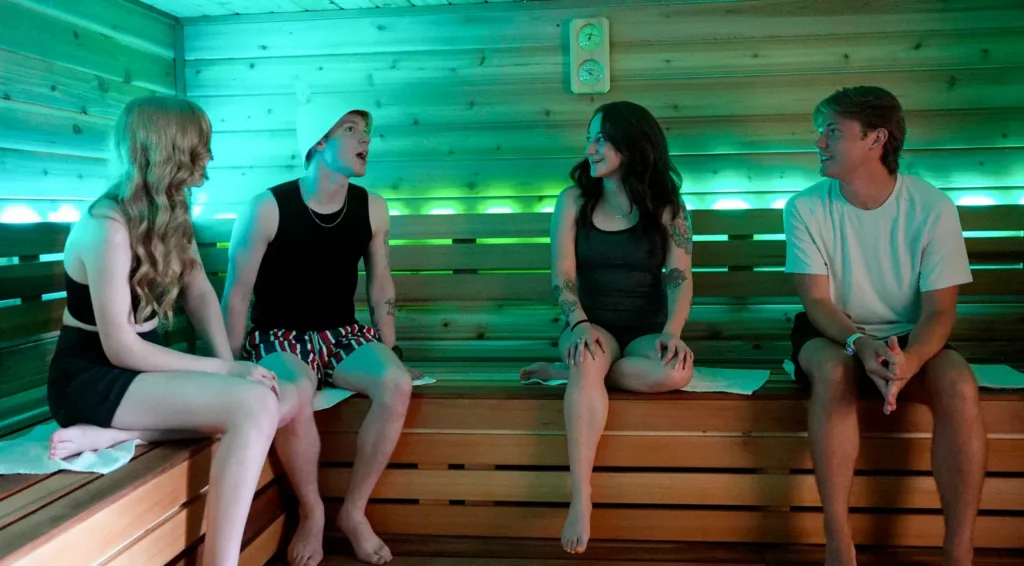
Every coached session ends the same way. Train, then sauna.
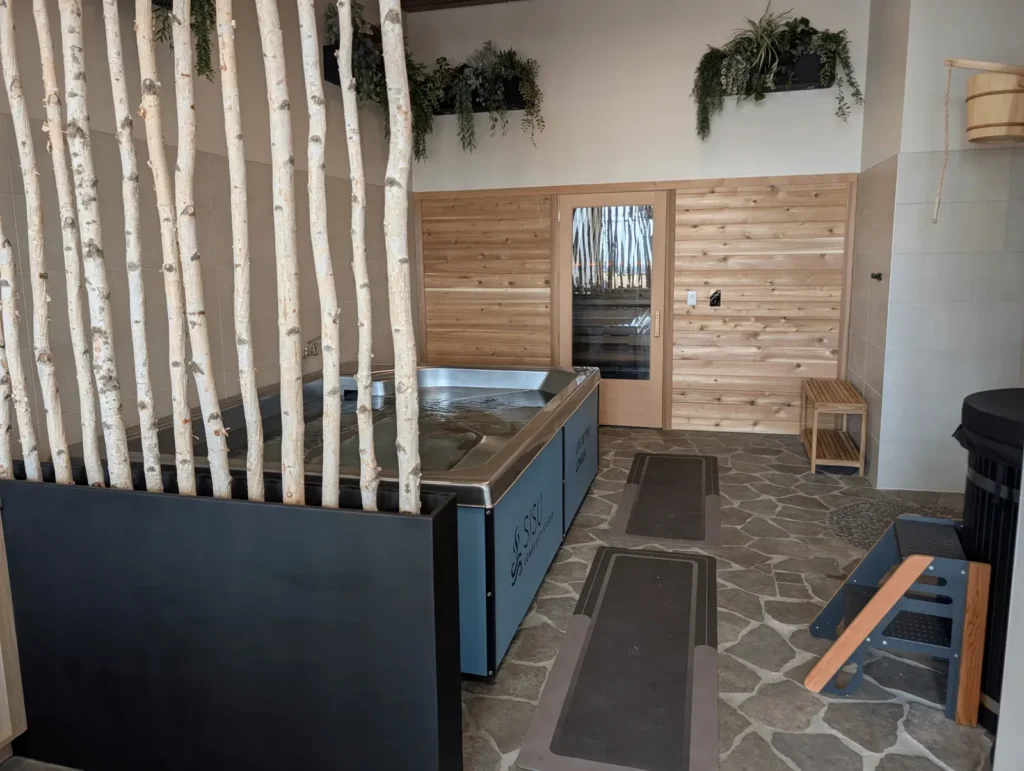
After the cohort finishes, sauna seats are reserved for the group. They walk together from the Lab to the sauna. They sit. They talk. They decompress. If the training stimulus was cardiovascular, they follow the contrast protocol (sauna, then cold plunge, ending on cold). If it was strength-dominant, sauna only, no cold for three to four hours, because cold suppresses the mTOR signaling muscles need to adapt (Roberts et al., 2015). The coach states the protocol at the end of every session.
This is not optional. It is the membership.
The Ritual exists for three reasons.
Retention. A small group sharing a sauna twice a week across a cycle builds the kind of social connection that makes cancellation feel like leaving a group, not cancelling a service. The 7-connection rule predicts this. Most fitness facilities never get there. Sisu’s design makes it the default.
Recovery compliance. Most adults skip recovery. When it is built into the session flow, same space, same building, same fifteen minutes, it becomes the default rather than a discipline problem. People who would never book a sauna session sit in one twice a week without thinking about it.
Conversion. “Come try a workout with us” is a decent invitation. “Come train with us, then sit in the sauna after with the group” is a memorable one. The Ritual is the experience that prospects remember.
Heat exposure on its own carries cardiovascular and metabolic benefits independent of the workout. Repeated sauna sessions associate with reduced cardiovascular mortality (Laukkanen & Kunutsor, 2024). Heat shock proteins help guide proper folding of newly synthesized muscle proteins after strength training. Growth hormone elevates. Blood flow increases nutrient delivery to recovering tissues. The recovery is real, the science is well-developed, and the social architecture is what gets people to actually do it.
The full timing logic, including when sauna alone is right, when contrast helps, and when to skip cold entirely, is detailed in our Contrast Therapy guide.
Cardio Is Self-Directed (And Why)
The cohort sessions build the musculoskeletal system. Cardiovascular training builds the engine. Both are essential. Neither replaces the other.
Cardio does not belong inside the coached cohort session. It is a different modality, one person, one machine or one trail, sustained effort. The 40-minute cohort window is wrong for it. Cardio belongs on the days the cohort does not meet, and in many cases it belongs outside the studio.
Zone 2 is the foundation. Steady-state aerobic work at or below the first ventilatory threshold. At this intensity the body primarily oxidizes fat, builds mitochondrial density, expands capillary networks, and increases cardiac stroke volume. Iñigo San Millan’s research at the University of Colorado has demonstrated that Zone 2 specifically targets mitochondrial function and fat oxidation capacity, making it a metabolic health intervention as much as an endurance one (San Millan & Brooks, 2018).
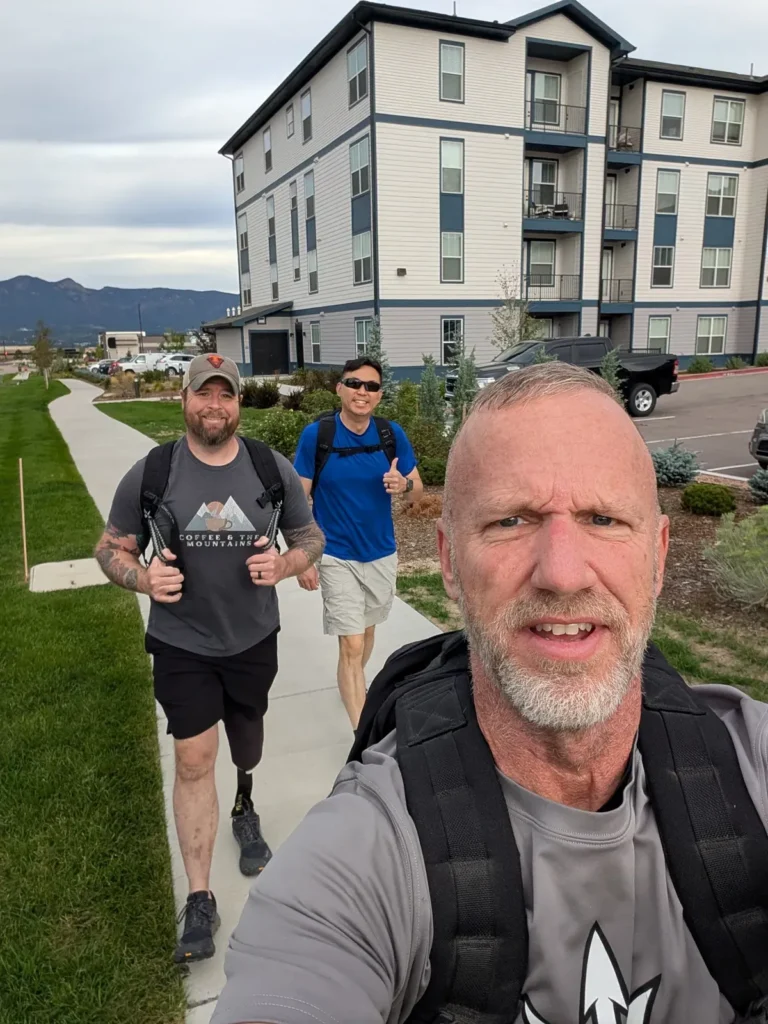
The Sisu volume target for Zone 2 is 180 to 240 minutes per week, distributed across three to four sessions of 45 to 60 minutes each. This aligns with the longevity recommendations Dr. Peter Attia teaches: most of your cardiovascular training time should sit at a conversational pace. What counts as Zone 2: brisk walking on incline, rucking with a weighted vest, cycling, rowing, swimming, easy jogging if you can keep your heart rate down, hiking with HR control. What does not count: group fitness classes with variable intensity, “easy” runs where heart rate drifts above the threshold, or anything where the pace is uncontrolled.
VO2 max intervals push the ceiling. Zone 2 builds the aerobic base. Intervals raise the maximum. Both are required. The primary protocol Sisu teaches is the Norwegian 4×4: ten minutes of easy warm-up, then four rounds of four minutes at 90 to 95 percent of max heart rate alternated with three minutes of active recovery, then five minutes of cool-down. This protocol has been studied extensively for VO2 max improvement in clinical and longevity contexts, originating from research at the Norwegian University of Science and Technology (Helgerud et al., 2007). New members spend their first cycle building the Zone 2 base before adding intervals.
The 80/20 rule governs the distribution. Stephen Seiler’s research across decades of training distribution analysis identified an effective formula: roughly 80 percent of training time below the first ventilatory threshold, and roughly 20 percent at or above the second. The middle ground, tempo work, is minimized. Too hard for Zone 2 mitochondrial adaptation, too easy for VO2 max stimulus. Maximum fatigue, minimum benefit (Stoggl & Sperlich, 2014).
The hard part of teaching this to adults is the instinct to go moderately hard every session. The coach’s job is to teach why easy days need to be truly easy and hard days need to be truly hard. The middle is where progress dies.
Sisu provides the protocol, the testing data that calibrates each member’s heart rate zones, the studio equipment for interval sessions and bad-weather days, and the accountability check-in at every cohort meeting. The execution is the member’s. Cardio is a daily habit, not a coached event, and the longevity outcome depends on consistency, not on supervision.
Three Members, Three Strongest Decades
The profiles below are illustrative composites that show how the assessment and programming work in different situations. They are not testimonials and do not represent specific individuals.
What this looks like in practice.
The active retiree. A 67-year-old man who hikes Garden of the Gods every weekend with his wife. His goals: keep hiking through his 80s, ski the front range one more decade, carry his future grandchildren. His assessment came back with a VO2 max in the Yellow zone for his anchor activity, grip in Green, balance just inside Green, and a movement screen that flagged hip mobility limitations on the left side. His Strongest Decade Outlook: Building. His training prescription: cohort twice a week, Zone 2 hiking three times a week using his existing trails, single-leg balance progression, hip mobility work in the Activate phase. His path to On Track is twelve to eighteen months of consistency. The system tells him whether he is closing the gap.
The endurance athlete carrying through midlife. A 52-year-old woman, three-time Ironman finisher, now training twelve to fifteen hours a week and watching herself not recover the way she used to. Her goals: keep racing, do Kona at 65, stay strong enough to handle her granddaughter when she starts school. Her assessment came back with VO2 max in the Blue zone, grip in Yellow (a surprise), loaded carry capacity well below what an Ironman should produce, and a movement screen flagging asymmetries from years of swim-bike-run repetition. Her Strongest Decade Outlook: Building, despite the elite cardiovascular numbers. Her training prescription: cohort twice a week to address strength asymmetries, KB Press and Farmer Carry as priority lifts, Zone 2 maintained at her existing volume but recalibrated to her tested heart rate, intervals one session per week. The cardiovascular ceiling was never her problem. The structural reserve underneath it was.
The post-service rebuild. A 44-year-old retired Army officer, twenty years of carrying body armor, ruck weight, and the cumulative damage of service. Chronic lower back pain, joint dysfunction from repetitive impact, movement asymmetries from decades of compensating. His goals: stay strong enough to hunt with his sons through their adulthood, keep up on the trail, age into his sixties without becoming the relative who cannot get off the couch. His assessment came back with VO2 max in Green, grip in Blue (he can still do everything he could in service), but movement quality in Red, foot health in Yellow, and balance in Yellow despite the strength. His Strongest Decade Outlook: Act Now, specifically because the chain is compromised. His training prescription: cohort twice a week with Movement Recovery support sessions as needed, foot work and ankle mobility prioritized in the warm-up, specific patterns loaded heavily that service did not train. The strength was never the problem. The chain underneath it was.
Three different members. Three different outlooks. Same assessment battery. Same cohort. Different priorities, different progressions, different trajectories.
The system scales because the assessment is honest about what each person actually needs.
It’s Never Too Early
The conversation about longevity often skips a generation. Strength training and cardiovascular conditioning are typically pitched at the 50-and-up audience because that is where decline starts becoming visible. The data does not support waiting that long.
Most adults in their 20s and 30s who train at all are training for the beach body, the marathon PR, or the bench press number. None of those are wrong. They are also incomplete. The capacities that defend the marginal decade are built decades in advance. The 30-year-old who learns to hinge correctly, hangs from a bar twice a week, and runs Zone 2 three days a week is depositing into an account they will draw on at 70. The 25-year-old who builds a movement vocabulary now will spend the next three decades refining and loading rather than starting from zero.
We welcome members in every decade. Younger members who join Sisu are often the most efficient at learning the patterns and progressing the loads, and they build a measurement record and a community of training partners that compounds across years. Training for longevity begins the day you start, and the cost of starting late is everything that did not get built when the body was most willing to build it.
What This Is, and What It Isn’t
The Sisu Strongest Decade method is one specific bet about how to defend the marginal decade. It is not the only approach, and it is not the right approach for everyone.
It is a training and measurement system built for adults in their forties, fifties, sixties, and beyond who want to build the structural and cardiovascular reserve to live the life they want at 75, 80, and beyond. It is built on peer-reviewed evidence, delivered through the Boyle adult functional training model, organized around a comprehensive longevity assessment, and reinforced through small-group cohort delivery and a structured recovery ritual. It is run under one roof with one staff and one member record, on month-to-month membership terms.
It is not a medical service. We do not diagnose, treat, or prescribe. The Sisu Assessment identifies physical capacity gaps relative to longevity research and member goals. When findings exceed our scope, members are referred to physicians, physical therapists, and other licensed professionals.
It is not a clinic. The longevity-clinic model delivers excellent care at $15,000 to $40,000 per year. That is the right answer for some people. The Sisu model exists for the much larger population that needs serious longevity training delivered at a price point that a working professional can sustain for a decade.
It is not a boutique fitness studio. Boutique fitness sells novelty, intensity, and sweat. The Sisu Lab sells mastery, measurement, and consistency. The members who stay for three years are doing the same fundamental movements they learned in their first cycle, with heavier loads and better quality.
It is not a guarantee. The body responds to training when the training is consistent, the recovery is protected, and the protocol matches the goal. The system works when the member shows up. We can measure your starting point, prescribe the right training, deliver it inside a community that makes consistency easier, and retest to prove the numbers are moving. The showing up is yours.
What we promise is the system. The outcomes are what the system produces when you run it.
A Final Word
Aging is not a one-way ratchet. The marginal decade is not the consequence of getting old. It is the consequence of forty years of asking the body for nothing.
You can do the math on your goals. You can measure where you are today. You can identify the gap. You can train to close it. The body will respond, at any age, when the stimulus is right and the consistency is real. The research is unambiguous. The methodology is well-developed. The community model exists.
That is the Sisu Strongest Decade. A method, a measurement loop, a community of members who train and recover together, and a coach who knows the numbers and is paid to move them.
If the question is whether you can build the body you need for the life you want at 80, the answer is almost certainly yes. The harder question is whether you are going to start.
To take the next step, schedule a Sisu Assessment at sisulongevity.com or visit us at 10855 Hidden Pool Heights, Suite 140, Colorado Springs, CO 80908.
Sisu Longevity Studio. Live Better… Longer.
References
Bohannon, R. W. (2019). Grip strength: An indispensable biomarker for older adults. Clinical Interventions in Aging, 14, 1681-1691. DOI: 10.2147/CIA.S194543
Bouchard, C., An, P., Rice, T., Skinner, J. S., Wilmore, J. H., Gagnon, J., et al. (1999). Familial aggregation of VO2max response to exercise training: Results from the HERITAGE Family Study. Journal of Applied Physiology, 87(3), 1003-1008. DOI: 10.1152/jappl.1999.87.3.1003
Cruz-Jentoft, A. J., Bahat, G., Bauer, J., Boirie, Y., Bruyère, O., Cederholm, T., et al. (2019). Sarcopenia: Revised European consensus on definition and diagnosis. Age and Ageing, 48(1), 16-31. DOI: 10.1093/ageing/afy169
Helgerud, J., Høydal, K., Wang, E., Karlsen, T., Berg, P., Bjerkaas, M., et al. (2007). Aerobic high-intensity intervals improve VO2max more than moderate training. Medicine & Science in Sports & Exercise, 39(4), 665-671. DOI: 10.1249/mss.0b013e3180304570
Hong, A. R., & Kim, S. W. (2018). Effects of resistance exercise on bone health. Endocrinology and Metabolism, 33(4), 435-444. DOI: 10.3803/EnM.2018.33.4.435
Huang, G., Gibson, C. A., Tran, Z. V., & Osness, W. H. (2005). Controlled endurance exercise training and VO2max changes in older adults: A meta-analysis. Preventive Cardiology, 8(4), 217-225. DOI: 10.1111/j.0197-3118.2005.04324.x
Kodama, S., Saito, K., Tanaka, S., Maki, M., Yachi, Y., Asumi, M., et al. (2009). Cardiorespiratory fitness as a quantitative predictor of all-cause mortality and cardiovascular events in healthy men and women: A meta-analysis. JAMA, 301(19), 2024-2035. DOI: 10.1001/jama.2009.681
Laukkanen, J. A., & Kunutsor, S. K. (2024). The multifaceted benefits of passive heat therapies for extending the healthspan: A comprehensive review with a focus on Finnish sauna. Temperature, 11(1), 27-51. DOI: 10.1080/23328940.2023.2300623
Leong, D. P., Teo, K. K., Rangarajan, S., Lopez-Jaramillo, P., Avezum, A., Orlandini, A., et al. (2015). Prognostic value of grip strength: Findings from the Prospective Urban Rural Epidemiology (PURE) study. The Lancet, 386(9990), 266-273. DOI: 10.1016/S0140-6736(14)62000-6
Mandsager, K., Harb, S., Cremer, P., Phelan, D., Nissen, S. E., & Jaber, W. (2018). Association of cardiorespiratory fitness with long-term mortality among adults undergoing exercise treadmill testing. JAMA Network Open, 1(6), e183605. DOI: 10.1001/jamanetworkopen.2018.3605
Mitchell, W. K., Williams, J., Atherton, P., Larvin, M., Lund, J., & Narici, M. (2012). Sarcopenia, dynapenia, and the impact of advancing age on human skeletal muscle size and strength: A quantitative review. Frontiers in Physiology, 3, 260. DOI: 10.3389/fphys.2012.00260
Roberts, L. A., Raastad, T., Markworth, J. F., Figueiredo, V. C., Egner, I. M., Shield, A., et al. (2015). Post-exercise cold water immersion attenuates acute anabolic signalling and long-term adaptations in muscle to strength training. The Journal of Physiology, 593(18), 4285-4301. DOI: 10.1113/JP270570
Saeidifard, F., Medina-Inojosa, J. R., West, C. P., Olson, T. P., Somers, V. K., Bonikowske, A. R., et al. (2019). The association of resistance training with mortality: A systematic review and meta-analysis. European Journal of Preventive Cardiology, 26(15), 1647-1665. DOI: 10.1177/2047487319850718
San Millan, I., & Brooks, G. A. (2018). Assessment of metabolic flexibility by means of measuring blood lactate, fat, and carbohydrate oxidation responses to exercise in professional endurance cyclists and less-fit individuals. Sports Medicine, 48(2), 467-479. DOI: 10.1007/s40279-017-0751-x
Stamatakis, E., Lee, I. M., Bennie, J., Freeston, J., Hamer, M., O’Donovan, G., et al. (2018). Does strength-promoting exercise confer unique health benefits? A pooled analysis of data on 11 population cohorts with all-cause, cancer, and cardiovascular mortality endpoints. American Journal of Epidemiology, 187(5), 1102-1112. DOI: 10.1093/aje/kwx345
Stoggl, T., & Sperlich, B. (2014). Polarized training has greater impact on key endurance variables than threshold, high intensity, or high volume training. Frontiers in Physiology, 5, 33. DOI: 10.3389/fphys.2014.00033
Watson, S. L., Weeks, B. K., Weis, L. J., Harding, A. T., Horan, S. A., & Beck, B. R. (2018). High-intensity resistance and impact training improves bone mineral density and physical function in postmenopausal women with osteopenia and osteoporosis: The LIFTMOR randomized controlled trial. Journal of Bone and Mineral Research, 33(2), 211-220. DOI: 10.1002/jbmr.3284